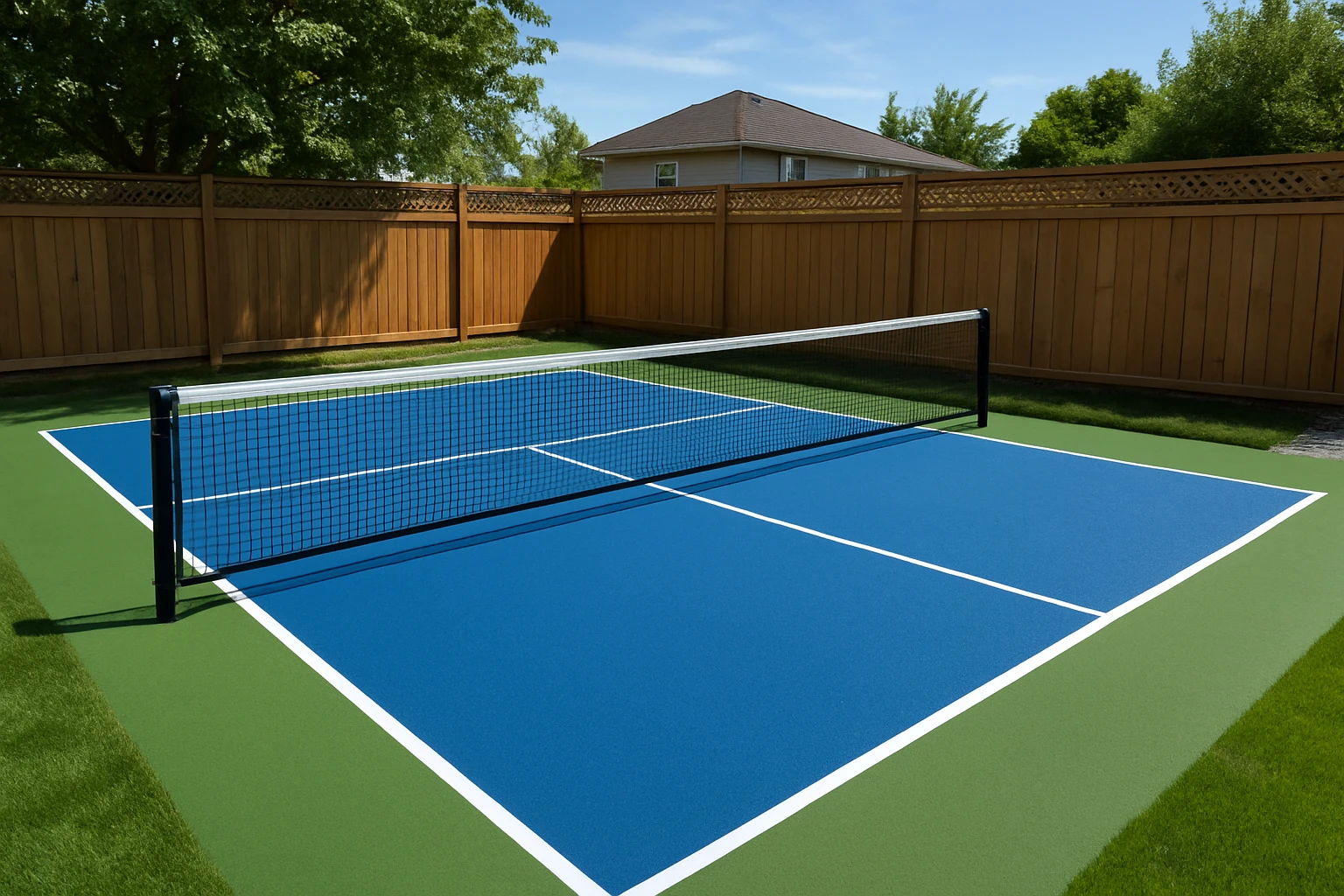
How to Build a Backyard Pickleball Court for Under $1,000 — DIY Budget Guide & Step-by-Step Plan
Introduction
In recent years the sport of pickleball has experienced rapid growth, prompting many homeowners to consider creating a personal court in their backyard. This guide explains how to design, prepare, and assemble a functional court while keeping total expenses below one thousand dollars. Readers will learn how to select cost‑effective materials, allocate space efficiently, and install a regulation‑size net with professional‑grade markings. By following each step, one can enjoy competitive play without the need for a commercial facility.
What You Will Need
The essential items for a budget‑friendly court include a level surface, a net system, court‑line stencils, and basic construction tools. The following products have been chosen for their balance of quality, price, and positive customer feedback.
- Pickleball 3.0 Tournament Net – $89.99, rating 4.8/5 (939 reviews)
- A11N Regulation Pickleball Net – $59.99, rating 4.5/5 (2,043 reviews)
- LndscLaser Pickleball Court Stencil Kit – $92.79, rating 4/5 (32 reviews)
- Measuring tape, level, shovel, compacted sand or crushed stone, and a rubber‑mallet
- Exterior‑grade paint or line‑marking spray
Step 1 – Choose and Prepare the Site
Select a flat area measuring at least 44 feet by 20 feet, which corresponds to the dimensions of the stencil kit. Clear vegetation, rocks, and debris, then grade the ground to achieve a uniform surface. Compact the soil with a plate compactor or hand tamper, and add a 2‑inch layer of sand or crushed stone to improve drainage. This preparation ensures that the court remains level and that water does not pool after rain.
Step 2 – Mark the Court Perimeter
Using a sturdy measuring tape, outline the outer rectangle of the court. Place stakes at each corner and run a string line between them to verify straight edges. The stencil kit includes a reference line labeled “A” that aligns with the long side of the court; following this guide will simplify the subsequent layout of the service zones and baselines.
Step 3 – Apply the Court Lines with the Stencil Kit
Lay the LndscLaser Pickleball Court Stencil Kit on the prepared surface, ensuring that the “A” reference line matches the previously marked perimeter. Secure the template with the included adhesive tape, and use a rubber‑mallet to press the edges firmly into the ground. Spray paint the lines vertically, following the kit’s recommendation to hold the can straight to avoid overspray. After the paint dries, remove the stencil and inspect the lines for continuity.
Step 4 – Install the Net System
Both net options meet official tournament dimensions, but the Pickleball 3.0 Tournament Net offers a steel frame that resists wind and provides greater stability for frequent use. Its portable design allows for quick assembly: unfold the base, insert the center pole, and attach the side poles using the provided connectors. The net tensioning straps enable precise adjustment to the regulation height of 36 inches at the sidelines and 34 inches at the center. For users who prioritize lightweight transport, the A11N Regulation Pickleball Net weighs only 20 pounds and fits into a compact carrying bag.
Step 5 – Secure the Net Base
Position the net base at the center of the court, aligning it with the painted center line. For the steel frame net, drive the base spikes into the ground to a depth of at least six inches, then tighten the securing bolts. The A11N model includes a PVC‑coated base that can be weighted with sandbags if the soil is soft. Proper anchoring prevents the net from shifting during vigorous rallies and ensures consistent net height.
Step 6 – Add Optional Boundary Fencing
If the backyard is shared with pets or children, consider installing a low‑profile fence or garden edging around the perimeter. This addition costs less than $100 and protects the painted lines from accidental damage. Use metal or plastic stakes to secure the fence, and ensure that the fence does not interfere with the service zones or baseline measurements.
Step 7 – Perform a Final Inspection
Walk the entire court, checking that all lines are crisp, the net height is accurate, and the base is stable. Use a spirit level to verify that the net is horizontal and that the court surface remains level across its length. Make any necessary adjustments to the net tension or line paint before the first game.
Step 8 – Maintain the Court
Regular maintenance extends the life of the court. Sweep debris weekly, reapply line paint annually, and tighten net straps after heavy wind events. Store the portable net components in a dry location during the off‑season to prevent rust. The durable steel construction of the Pickleball 3.0 net and the weather‑resistant polymer of the A11N net both withstand seasonal changes when properly cared for.
Tips & Pro Tips
- Measure twice and mark once; accurate measurements reduce the need for re‑painting.
- When using spray paint, apply thin coats to avoid bleeding; a second coat will provide a sharper line.
- For a smoother net surface, tighten the straps incrementally rather than applying excessive force at once.
- If the ground is uneven, add a thin layer of sand in low spots before compacting.
- Store the net in its original bag to protect the frame from moisture.
Troubleshooting
Net sagging after wind: Re‑tighten the tensioning straps and ensure the base spikes are fully embedded.
Paint peeling: Use exterior‑grade acrylic paint and allow at least 24 hours of curing before playing.
Stencils shifting during painting: Apply extra adhesive tape around the edges and press firmly with a rubber mallet.
Conclusion
By following this structured plan, one can construct a fully functional backyard pickleball court for under one thousand dollars. The combination of a durable net, reusable stencil kit, and careful site preparation provides a professional playing experience without the expense of a commercial facility. Readers are encouraged to enjoy regular practice, host friendly tournaments, and share the benefits of this fast‑growing sport with family and neighbors.
Products Mentioned in This Guide
Frequently Asked Questions
What is the minimum space required to install a regulation‑size backyard pickleball court?
A court needs a playing area of 20 ft × 44 ft plus at least 5 ft of clearance on all sides, so a minimum of about 30 ft × 54 ft is recommended.
How can I keep the total cost of building a backyard pickleball court under $1,000?
Use affordable materials like a basic net kit, DIY line stencils, and a level concrete or compacted gravel base, and source items from discount retailers or sales.
Which net system provides the best value for a budget-friendly pickleball court?
The Pickleball 3.0 Tournament Net, priced around $90, offers high durability and a 22‑ft width while staying well within a $1,000 budget.
Do I need professional paint for court markings, or can I use stencils?
Stencils are a cost‑effective alternative to paint; they create clear, regulation‑size lines and can be reused for future resurfacing.
What type of surface is recommended for a low‑cost backyard pickleball court?
A compacted crushed stone or smooth concrete slab provides a flat, durable playing surface without the expense of specialized sports flooring.