How to Build a Backyard Pickleball Court Near Mature Trees: DIY Root Protection Guide
Introduction
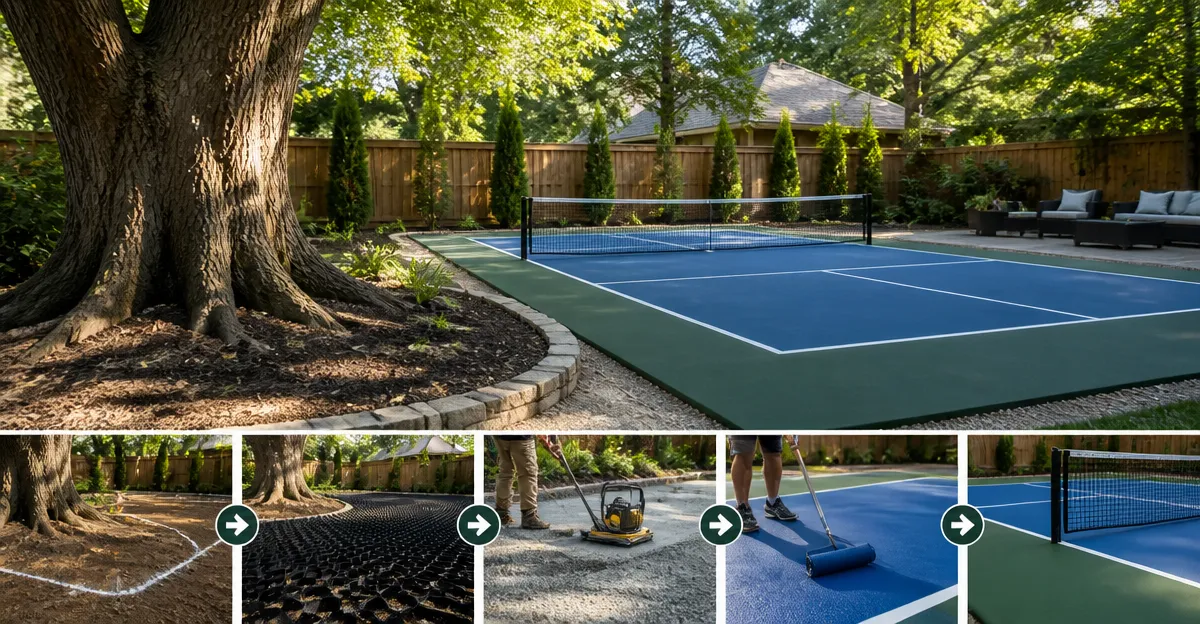
One will discover how to transform a tree‑lined backyard into a functional pickleball court without harming mature roots. This guide explains the essential planning, root‑protection methods, and installation steps required for a safe, durable playing surface. Readers will also receive recommendations for reliable tools that simplify each phase of the project. By following these instructions, one can enjoy regular games while preserving the health of valuable trees.
What You’ll Need
- Measuring tape and string line
- Root barrier material (heavy‑duty landscape fabric)
- Shovel and hand tamper
- Gravel base (3‑4 inches)
- Compactable topsoil or synthetic court surface
- Jisucute Magnetic Pickleball Court Lines
- Pickleball Net Set with Paddles
- BAGAIL Portable Pickleball Net Set
- Portable Pickleball Net Set
- Franklin Sports Pickleball Court Markers
Step 1: Assess the Site and Map Tree Roots
The first major step is to evaluate the backyard layout and identify the location of mature trees. One should locate the drip line of each tree, as this approximates the spread of the root system; roots often extend 1.5 times the trunk diameter. Using a garden spade, gently probe the soil to confirm root depth and avoid areas with dense, surface‑level roots. Mark the safe perimeter with Franklin Sports Pickleball Court Markers, which are durable, reusable stakes that provide clear visual cues without damaging the soil.
Step 2: Install a Root Barrier to Protect Tree Health
After the safe zone is defined, install a root barrier to prevent future root intrusion into the playing surface. Heavy‑duty landscape fabric, overlapped by at least 12 inches, creates a physical barrier while allowing water and air to pass, thereby preserving tree vitality. Secure the fabric with metal staples or U‑shaped pins, ensuring a tight seal against the ground to stop roots from growing underneath. This step reduces the need for later excavation, which can stress trees and compromise their stability.
Step 3: Prepare the Base and Level the Surface
With the barrier in place, spread a 3‑to‑4‑inch layer of crushed gravel across the court area. Gravel provides drainage, reduces soil compaction, and creates a stable foundation for the top layer. Compact the gravel using a hand tamper or plate compactor until it feels firm underfoot. Finally, add a compactable topsoil or synthetic court surface, leveling it with a straight board; this surface will host the magnetic lines and net system.
Step 4: Install the Net System
Choosing a net system that accommodates both indoor and outdoor use simplifies future relocation. The BAGAIL Portable Pickleball Net Set offers a 22‑foot regulation‑size net with wheels, allowing easy movement around trees for seasonal adjustments. Its steel frame is weather‑resistant, and the included ball collector keeps the playing area tidy. For those who prefer a lighter option, the Portable Pickleball Net Set provides a similar regulation size with a quick‑assembly design, making it ideal for temporary setups.
Step 5: Mark the Court with Magnetic Lines
Accurate court markings are essential for fair play, and the Jisucute Magnetic Pickleball Court Lines eliminate the need for measuring tape or permanent paint. The magnetic system snaps onto the metal base plates that can be positioned on the prepared surface, ensuring straight, consistent lines every time. Because the lines are removable, one can easily re‑configure the layout if tree growth necessitates a shift in the court dimensions. The kit includes all required components for a standard court, and its portable nature means the court can be stored during winter months.
Step 6: Equip the Court with Paddles and Balls
To complete the setup, acquire paddles and balls that match the court’s regulation size. The Pickleball Net Set with Paddles bundles a 22‑foot net, four paddles, and a set of pickleballs, providing a ready‑to‑play package for families and beginners. The paddles are made from lightweight composite material, offering a balanced feel and reduced fatigue during extended rallies. The included carry bag facilitates storage and transport, ensuring that equipment remains protected from the elements.
Tips & Pro Tips
- Perform a soil test before installing the barrier to ensure proper drainage; amend the soil if it is overly compacted.
- When positioning the net, keep a minimum of 3‑feet clearance from the trunk to avoid accidental collisions.
- Seasonally inspect the magnetic lines for rust; a quick wipe with a damp cloth restores their appearance.
- Use a rubber mat under the net base if the ground remains soft after rain; this prevents the frame from sinking.
- Consider adding a shade sail anchored away from the tree canopy to provide sun protection without interfering with root zones.
Troubleshooting
Problem: The magnetic lines shift during play.
Solution: Verify that the metal base plates are firmly pressed into the surface; add a thin layer of sand beneath the plates to increase friction.
Problem: Roots begin to appear at the court edge.
Solution: Extend the root barrier by an additional foot and re‑compact the surrounding gravel to seal any gaps.
Conclusion
One now possesses a complete roadmap for constructing a backyard pickleball court that respects mature tree roots while delivering a professional‑grade playing experience. By following the site assessment, root‑protection, base preparation, net installation, and line‑marking steps, the court will remain safe, functional, and adaptable for years to come. The recommended tools streamline each phase, yet the project remains feasible without them, emphasizing flexibility for any budget. Enjoy countless matches, confident that the surrounding trees continue to thrive.
Products Mentioned in This Guide
Frequently Asked Questions
How can I protect mature tree roots when building a backyard pickleball court?
Install a heavy‑duty landscape fabric root barrier and place a 3‑4 inch gravel base over it to shield roots while providing drainage.
What materials are needed for a DIY pickleball court near trees?
You’ll need measuring tape, string line, root barrier fabric, shovel, hand tamper, 3‑4" gravel, compactable topsoil or synthetic surface, and court line and net kits.
Do I need to level the ground before laying the court surface?
Yes, compact the gravel base and use a hand tamper to create a level, stable foundation before adding topsoil or synthetic surfacing.
Can I use synthetic court surface instead of topsoil near trees?
Synthetic surfaces are ideal near trees because they’re lightweight, require less soil disturbance, and work well over a protected gravel base.
What are recommended tools for marking and finishing the court?
Magnetic pickleball court line kits and a quality net set with paddles simplify marking and completing the playing area.