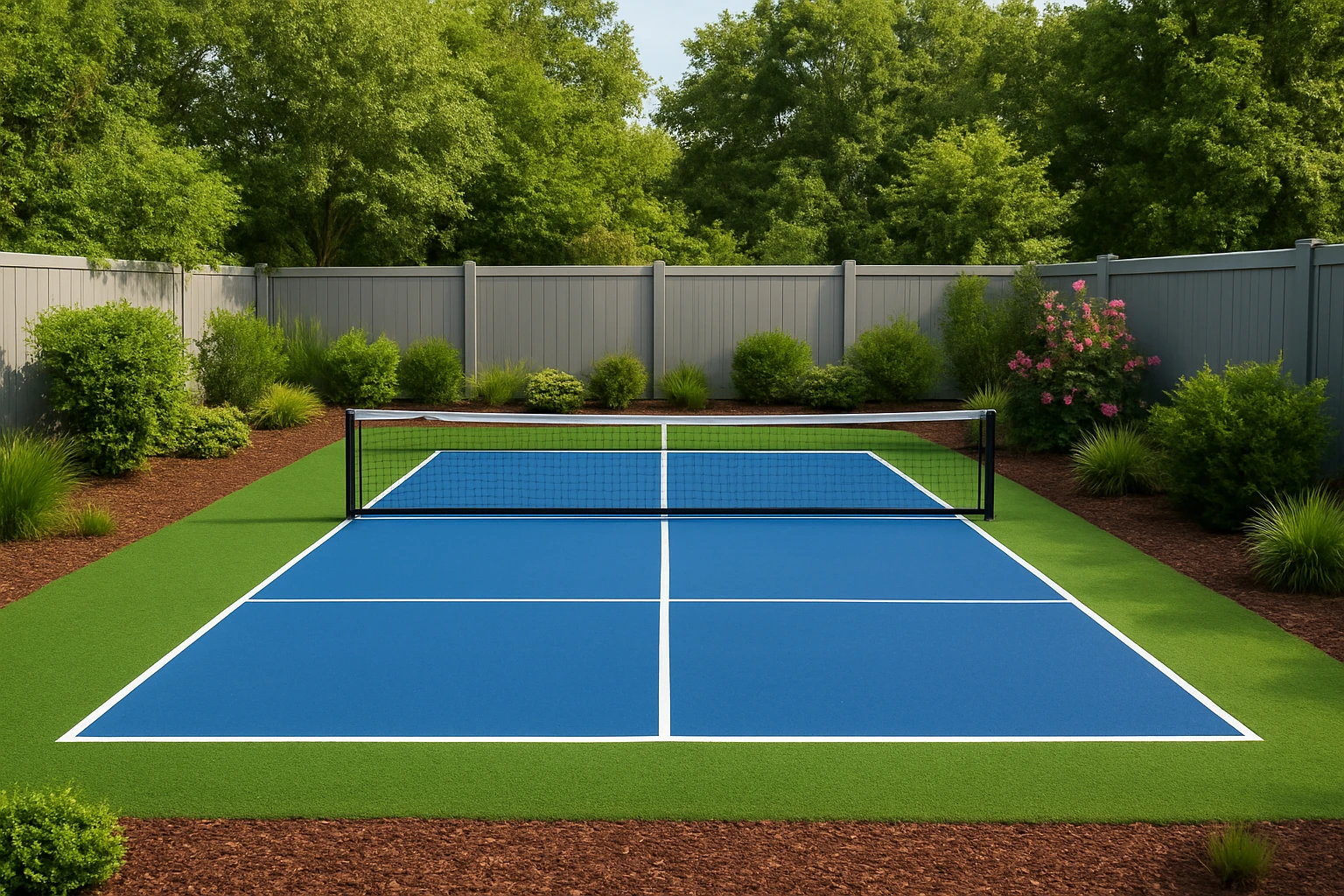

How to Landscape a Backyard Pickleball Court: HOA‑Compliant Designs, Rules, and Approval Checklist
Introduction
Backyard pickleball courts have become a popular amenity for families and communities seeking active recreation. This guide explains how to design a court that complies with homeowners association (HOA) regulations, selects appropriate marking products, and follows a systematic approval process. Readers will learn the essential steps for site assessment, surface preparation, product installation, and maintenance while ensuring that the project aligns with community standards.
The article balances theoretical planning with practical product recommendations, allowing readers to proceed confidently whether they intend to purchase supplies or simply apply the concepts using existing materials.
Background and Context
Pickleball combines elements of tennis, badminton, and table tennis, and its official court dimensions are 20 ft × 44 ft for both singles and doubles play. Many HOAs impose restrictions on permanent structures, visible markings, and noise levels. Understanding these constraints before breaking ground prevents costly revisions and neighbor disputes.
Key considerations include:
- Setback requirements from property lines and shared fences.
- Permitted surface types—hard‑court, concrete, or portable mats.
- Visibility of markings without permanent paint.
- Safety buffers such as landscaping or fencing to contain balls.
By integrating these factors early, homeowners can create a functional court that respects HOA guidelines and enhances property value.
Design Planning and Site Selection
Effective planning begins with a site survey. Measure the available area, noting existing trees, irrigation systems, and utility lines. A minimum of 30 ft × 60 ft is advisable to accommodate the court plus a 5‑ft safety buffer on all sides. Ensure the ground is level; if not, consider a compacted gravel base topped with a polymer‑sealed surface.
Landscape elements can serve dual purposes. For example, low‑height hedges or ornamental grasses provide visual screening while acting as a natural ball‑containment barrier. Incorporate permeable pavers to maintain drainage and reduce runoff, which aligns with many HOA sustainability policies.
When the layout is finalized, draft a scaled site plan that includes dimensions, setbacks, and proposed materials. This document will be a central component of the HOA approval package.
Choosing Court Marking Products
Temporary, non‑permanent marking solutions are ideal for HOA‑approved courts. Two leading products meet the criteria of durability, ease of installation, and clean removal.
The first option is the HolderProf Pickleball Court Tape. This 2‑inch wide, 300‑ft roll offers anti‑slip, wear‑resistant material suitable for both indoor and outdoor surfaces. It is rated 4.4 out of 5 stars based on 49 reviews and is priced at $26.99. The tape adheres strongly yet removes without residue, making it perfect for temporary installations.
The second alternative is the Franklin Pickleball Court Marker Kit. This kit includes four L‑style and eight T‑style markers that snap onto a standard measuring tape, allowing rapid layout of court boundaries. It holds a 4.4‑star rating from 1,667 reviews and costs $19.99. The markers are bright, reusable, and easy to transport between locations.
Both products complement the landscaping guide Landscaping For Dummies, a Kindle edition priced at $15.00 with a 4.5‑star rating from 54 reviewers. The book provides foundational knowledge on soil preparation, plant selection, and sustainable design, which can be applied to the court’s surrounding environment.
Installation Steps for Temporary Court Markings
Follow these steps to install the selected marking system while adhering to HOA standards:
- Surface Preparation: Clean the intended area of debris, dust, and moisture. For concrete or asphalt, a light pressure wash followed by a dry period ensures optimal adhesion.
- Measure and Outline: Using a tape measure, mark the 20 ft × 44 ft rectangle. For the HolderProf tape, apply the adhesive edge along each line, pressing firmly for a secure bond. For the Franklin kit, snap the L‑ and T‑style markers onto the measuring tape at the prescribed intervals and press them onto the surface.
- Secure Corners: Overlap tape ends by at least 2 inches to prevent lifting. With the Franklin markers, ensure each corner piece is firmly seated.
- Inspect for Compliance: Verify that the markings are at least 5 ft away from property lines and that the visual impact aligns with HOA aesthetic guidelines.
- Documentation: Photograph the completed layout and attach the images to the HOA submission package.
Removal is straightforward. For the tape, gently peel from one corner; any residual adhesive can be removed with a mild solvent that does not damage the underlying surface. The Franklin markers detach cleanly and can be stored for future use.
Comparison and Selection Guide
| Feature | HolderProf Pickleball Court Tape | Franklin Pickleball Court Marker Kit |
|---|---|---|
| Installation Time | Approximately 30 minutes for a full‑size court | Approximately 15 minutes using pre‑measured markers |
| Surface Compatibility | Hardwood, vinyl, rubber, gym floors, concrete, asphalt | Same as tape; markers work on flat surfaces |
| Durability | Wear‑resistant, anti‑slip, water‑resistant | Reusable markers; tape may need replacement after heavy use |
| Removal | Residue‑free peel‑off | Markers snap off without leaving marks |
| Cost | $26.99 per 300‑ft roll | $19.99 per kit |
| Customer Rating | 4.4/5 (49 reviews) | 4.4/5 (1,667 reviews) |
Homeowners seeking a quick, reusable solution may prefer the Franklin kit, especially if the court will be relocated seasonally. Those desiring a continuous line with high visibility and anti‑slip properties may opt for the HolderProf tape.
Best Practices & Tips
- Obtain Written HOA Approval: Submit the scaled site plan, product specifications, and a maintenance schedule. Include photographs of comparable courts in the neighborhood.
- Maintain Consistent Line Width: Use the 2‑inch width of the HolderProf tape to match official court standards, ensuring fair play.
- Incorporate Lighting: Install low‑glare LED floodlights positioned behind the safety buffer to avoid glare on the playing surface while meeting HOA lighting ordinances.
- Plan for Drainage: Grade the surrounding area away from the court at a slope of 1‑2% to prevent water pooling, which can damage temporary markings.
- Seasonal Maintenance: Inspect the markings after heavy rain or winter freeze; re‑apply tape or reposition markers as needed.
- Use Sustainable Landscaping: Choose native grasses and drought‑tolerant shrubs for the buffer zone, reducing irrigation demands and aligning with green‑building initiatives.
Frequently Asked Questions
1. Can I install a permanent painted court in an HOA community?
Most HOAs prohibit permanent paint on shared surfaces without explicit permission. Temporary tape or marker systems are usually acceptable because they can be removed without altering the substrate.
2. How often should I replace the court tape?
The HolderProf tape is designed for repeated use, but exposure to UV light and heavy foot traffic may reduce adhesion after 12‑18 months. Replace when the line begins to fade or peel.
3. Are the Franklin markers suitable for indoor courts?
Yes, the markers can be applied to smooth indoor floors such as gym mats or polished concrete, provided the surface is clean and dry.
4. What is the minimum setback required by most HOAs?
While requirements vary, a common minimum is 5 ft from the property line or shared fence. Verify the specific distance in the HOA governing documents.
5. Do I need a permit for a backyard pickleball court?
Permitting depends on local building codes and HOA rules. In many jurisdictions, a temporary court that does not involve permanent structures does not require a building permit, but a site plan may still be required for HOA approval.
6. How can I protect the court from wind‑blown balls?
Install a low fence (3‑4 ft) or a row of dense shrubs around the perimeter. This approach satisfies safety concerns while enhancing the aesthetic appeal.
7. Is a portable net necessary?
Yes, a portable net allows the court to be used for multiple sports and can be stored when not in use, complying with HOA expectations for minimal permanent fixtures.
Conclusion
Designing an HOA‑compliant backyard pickleball court requires careful site assessment, adherence to community regulations, and the selection of appropriate temporary marking products. By following the outlined planning steps, installing either the HolderProf Pickleball Court Tape or the Franklin Pickleball Court Marker Kit, and incorporating sustainable landscaping, homeowners can enjoy a functional, attractive court that enhances property value while respecting neighborhood standards.
With the provided approval checklist and best‑practice tips, the project can progress smoothly from concept to playable reality.
Products Featured in This Guide
HolderProf Pickleball Court Tape
Price: $26.99
Rating: 4.4/5 (49 reviews)
Featured because it provides a durable, anti‑slip, residue‑free line solution that meets official court dimensions and can be removed to satisfy HOA requirements.
Franklin Pickleball Court Marker Kit
Price: $19.99
Rating: 4.4/5 (1,667 reviews)
Featured because it offers a reusable, quick‑setup marking system that is ideal for temporary courts and portable use across multiple locations.
Landscaping For Dummies
Price: $15.00
Rating: 4.5/5 (54 reviews)
Featured because it supplies essential knowledge on soil preparation, plant selection, and sustainable design that complements the court’s surrounding landscape.

