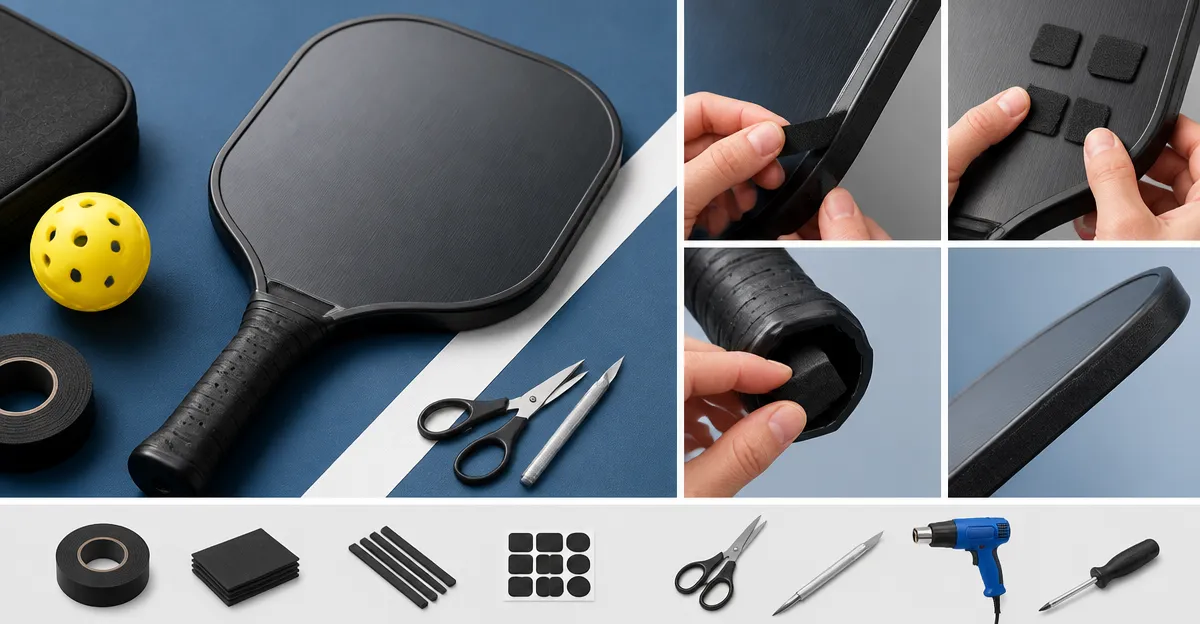
How to Quiet a Pickleball Paddle: Easy DIY Noise‑Dampening Mods for Quieter Play
Introduction
Every pickleball enthusiast knows that a paddle that rattles on each contact can be distracting for both the player and the surrounding opponents. Excessive vibration not only creates an audible clack but can also lead to hand fatigue and reduced control. This guide teaches the reader how to identify the sources of unwanted noise and apply practical, inexpensive modifications that transform a noisy paddle into a quiet, responsive tool. By the end of the article, the reader will understand why each modification works, which Amazon‑available products can assist, and how to maintain a quieter playing experience without sacrificing performance.
What You’ll Need
- Thin vibration‑dampening tape (self‑adhesive polymer strips)
- Lead weight strips or thin lead tape for balance adjustment
- High‑grip over‑grip tape (e.g., the grip on the CPX Pro Carbon Fiber Pickleball Paddle)
- Edge‑foam padding or rubber edge protectors
- Small screwdriver or Allen key (if your paddle has removable screws)
- Cleaning cloth and mild alcohol wipes
Step 1: Diagnose the Noise Source
Before applying any modification, determine whether the noise originates from the paddle face, the core, or the handle. Hold the paddle by the grip and tap the face near the sweet spot with a pickleball. A sharp clack usually indicates insufficient damping in the core, while a hollow thud suggests excessive vibration at the edges. Recording the sound with a smartphone can help you compare before and after results.
The Vatic Pro Prism Carbon Fiber Paddle is praised for its foam‑injected walls that already reduce shock. Using it as a benchmark allows you to gauge how much improvement your own paddle needs.
Step 2: Apply Vibration‑Dampening Tape to the Core
Thin polymer tape placed between the face and the core absorbs impact energy, converting kinetic vibrations into heat rather than audible sound. Cut strips to the size of the paddle’s interior surface, avoiding the sweet spot to preserve feel.
Why this product helps: The CPX Pro Carbon Fiber Pickleball Paddle, priced at $49.99 with a 4.6‑star rating, features a lightweight carbon fiber face that transmits vibrations quickly. Adding dampening tape to a similar paddle creates a noticeable reduction in rattling without adding bulk.
Installation steps:
- Remove the paddle face if your model uses removable screws (most carbon paddles do not, so skip this sub‑step for the CPX Pro).
- Clean the interior surface with an alcohol wipe to ensure adhesion.
- Apply the tape in a grid pattern, leaving a small gap around the central sweet spot.
- Re‑assemble the paddle and test the sound by striking a ball.
Step 3: Add Lead Weight Strips for Balance and Dampening
Weight strips placed along the paddle’s edges increase mass, which naturally lowers the frequency of vibrations. This technique also allows you to fine‑tune the paddle’s balance, making it feel more solid during back‑court drives.
Why it works: The CZRR Raw Carbon Fiber Pickleball Paddle is a budget‑friendly option at $29.98 with a 4.5‑star rating. Its lightweight design (8.0‑8.5 oz) makes it an ideal candidate for weight addition; a few strips can transform its feel without compromising maneuverability.
Procedure:
- Measure 1‑inch strips of 1‑mm lead tape.
- Apply them symmetrically on both sides of the paddle, starting near the throat and extending toward the edge.
- Press firmly to ensure full contact.
- Re‑test the paddle; you should notice a deeper, more muted sound and a slightly more head‑heavy feel.
Step 4: Upgrade the Grip with High‑Grit Over‑Grip
A loose or slippery grip can transmit hand tremors to the paddle, amplifying noise. Replacing the factory grip with a high‑grit, sweat‑wicking over‑grip reduces micro‑movements and adds a thin layer of cushioning.
Product relevance: The CPX Pro’s “tennis style grip” already offers comfort, but the Vomeepeak T700 Carbon Fiber Paddle (priced at $39.99, 4.6‑star rating) includes an ergonomic, non‑slip grip that many players find superior. Using a similar grip material on any paddle provides the same vibration‑absorbing benefit.
Steps:
- Remove the existing grip by peeling it away.
- Clean the handle with a damp cloth.
- Wrap the new over‑grip tightly, overlapping each turn by about 50%.
- Secure the end with the provided tape.
Step 5: Install Edge Foam or Rubber Protectors
The outer rim of a paddle is a common source of clacking when it contacts the ball’s edge. Soft foam or rubber edge protectors act as a buffer, absorbing impact and preventing the hard carbon face from striking the ball directly.
Why this matters: The Vatic Pro Prism’s foam‑injected walls already demonstrate the effectiveness of internal cushioning. Adding external edge foam mirrors that principle, especially for paddles lacking built‑in edge protection.
Implementation:
- Purchase thin self‑adhesive edge foam strips (available in most sporting goods stores).
- Cut them to the paddle’s circumference.
- Apply evenly around the edge, ensuring no gaps.
- Press firmly and allow 24 hours for adhesive cure before play.
Tips & Pro Tips
- Test after each modification. Play a short rally and listen for changes; incremental adjustments prevent over‑damping.
- Use a balance board. After adding weight, verify that the paddle’s balance point remains comfortable for your swing style.
- Avoid excessive weight. Adding more than 1 oz per side can make the paddle too head‑heavy, reducing maneuverability.
- Maintain grip hygiene. Periodically wipe the grip with a mild disinfectant to prevent sweat buildup, which can re‑introduce vibration.
- Consider a paddle cover. A padded cover protects the foam edges during transport and prolongs the life of your modifications.
Troubleshooting
| Problem | Possible Cause | Solution |
|---|---|---|
| Noise persists after tape | Tape not covering full interior surface | Apply additional strips, focusing on areas near the handle where vibration travels. |
| Paddle feels too heavy | Excessive lead tape | Remove one strip from each side and retest balance. |
| Grip slips when sweaty | Low‑quality over‑grip | Replace with a high‑grit, moisture‑wicking grip similar to the Vomeepeak model. |
| Edge foam peels off | Improper surface cleaning | Re‑clean with alcohol, then re‑apply foam with firm pressure. |
Conclusion
Quieting a pickleball paddle is achievable through a series of focused, low‑cost modifications. By diagnosing the source of noise, applying vibration‑dampening tape, strategically adding lead weight, upgrading the grip, and protecting the edges, the player creates a paddle that sounds less like a metal clang and more like a controlled thud. The recommended Amazon products—CPX Pro, Vatic Pro Prism, CZRR Raw, and Vomeepeak T700—illustrate how quality materials enhance each step. Implement these changes, test frequently, and enjoy a smoother, quieter game that benefits both personal performance and court etiquette.
Products Mentioned in This Guide
Frequently Asked Questions
What causes a pickleball paddle to make a loud clacking sound?
The sound comes from vibrations at the paddle face and edges when the ball strikes, amplified by hollow cores or loose components.
Which DIY modification is most effective for reducing paddle noise?
Applying thin vibration‑dampening tape to the face and edges is the simplest and most effective way to mute rattles.
Can adding lead tape affect my paddle’s balance?
Yes, thin lead strips can lower the swing weight and improve stability, but add them sparingly to avoid over‑balancing.
Where can I buy the recommended over‑grip and edge‑foam products?
Both are available on Amazon; look for polymer vibration‑dampening tape and rubber edge protectors in the sports accessories section.
Will these noise‑dampening mods reduce my paddle’s power or control?
When applied correctly they mute vibrations without noticeably affecting power, and may even enhance control by reducing hand fatigue.