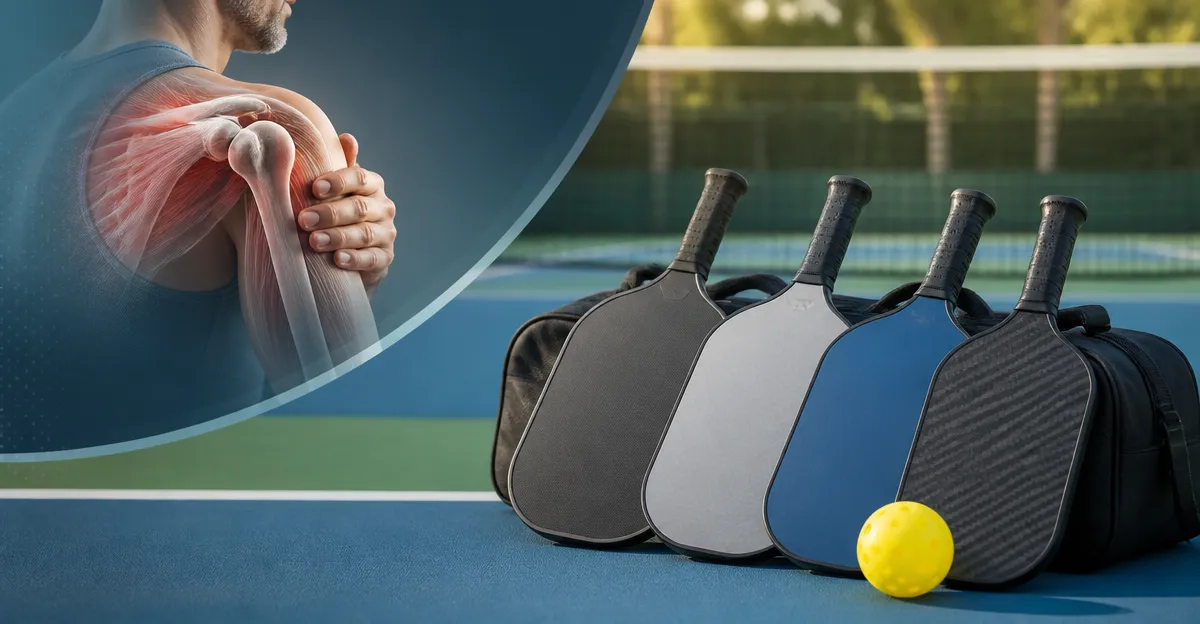
Pickleball Paddle Selection After Rotator Cuff Surgery: The Ultimate Guide to Choosing a Shoulder‑Friendly Paddle
Introduction
The purpose of this guide is to empower players who have undergone rotator cuff surgery to select a pickleball paddle that minimizes shoulder strain while preserving performance. Readers will learn the biomechanical factors that influence paddle choice, understand how weight, balance, grip, core, and surface texture affect the shoulder, and receive evidence‑based product recommendations. By the end of the article, one will be able to evaluate paddles objectively and make a confident purchase decision.
Background / Context
Rotator cuff surgery repairs the tendons that stabilize the shoulder joint. During the healing phase, the musculature regains strength gradually, and excessive torque or vibration can impede recovery. In pickleball, the paddle acts as a lever that transmits forces from the arm to the ball. A paddle that is too heavy, poorly balanced, or overly rigid can increase shear forces on the repaired tendons, leading to pain or re‑injury. Conversely, a well‑designed paddle can reduce impact shock, promote smoother swing arcs, and support a safe return to play.
Key concepts include:
- Weight: Lighter paddles reduce inertial load but must retain sufficient mass for control.
- Balance point: Head‑light paddles shift mass toward the handle, decreasing torque at the shoulder.
- Grip size and material: An ergonomically sized grip minimizes wrist deviation and muscle fatigue.
- Core composition: Honeycomb or polymer cores dampen vibration, protecting the rotator cuff.
- Surface texture: Matte or textured surfaces provide spin without requiring excessive wrist snap.
Understanding Rotator Cuff Limitations
After surgery, the shoulder can tolerate only limited torque during overhead or rapid forehand motions. Players should aim for a paddle that encourages a fluid, low‑impact swing. A head‑light design reduces the moment arm, thereby decreasing the rotational force required to accelerate the paddle. Additionally, a paddle with a polymer honeycomb core absorbs shock, converting kinetic energy into a smoother feel.
The TENVINA Carbon Fiber Paddle exemplifies these principles. Its multi‑layer T700SC carbon fiber face provides rigidity without excessive weight, while the polymer honeycomb core offers vibration dampening. The paddle is USAPA approved and rated 4.7/5 by over 2,400 reviewers, indicating broad acceptance among both recreational and competitive players.
For beginners seeking a more forgiving option, the MTEN Pickleball Paddle Set includes a lightweight fiberglass face and polypropylene honeycomb core that together produce a soft, controllable feel. The set’s ergonomic, perforated grip reduces sweat accumulation, which is beneficial for patients who need to avoid sudden wrist adjustments.
Players with intermediate skill levels may consider the JoncAye Pickleball Paddle Set. Its 8 oz fiberglass paddles feature a large sweet spot and a vibration‑dampening PP honeycomb core, delivering a balance of power and control without overloading the shoulder.
Paddle Weight and Balance
Weight is measured in ounces; most shoulder‑friendly paddles fall between 7.5 oz and 8.5 oz. A paddle lighter than 7.5 oz may feel flimsy, forcing the player to generate additional swing speed, which can increase shoulder load. Conversely, paddles above 9 oz often create excessive torque.
The Vatic Pro Prism Paddle weighs 8.0 oz and utilizes a foam‑injected edge wall that distributes load evenly across the paddle surface. This design reduces the perceived weight at the head, making the swing smoother for patients recovering from rotator cuff repair.
For a mid‑range option with a slightly thicker profile, the CPX Pro Carbon Fiber Paddle offers a 8 oz weight and a carbon‑fiber face that delivers a solid feel while maintaining a head‑light balance. Its edgeless construction further minimizes vibration, a key factor for post‑surgical comfort.
When selecting a paddle, patients should hold the paddle at the grip and assess whether the head feels balanced or overly forward. A head‑light paddle will naturally sit closer to the hand, encouraging a relaxed swing path.
Grip Size and Material
Grip circumference is measured in inches; the optimal size typically ranges from 4.0 in to 4.5 in for most adult hands. An oversized grip forces the wrist into ulnar deviation, increasing strain on the rotator cuff. An undersized grip leads to excessive grip force, also taxing the shoulder.
The TENVINA Carbon Fiber Paddle features a synthetic leather grip with ridged protrusions and sweat‑wicking perforations, allowing a secure yet relaxed hold. The MTEN set’s 4.57 in grip circumference is explicitly designed for maximum wrist snap without compromising comfort.
Players who prefer a tennis‑style grip may appreciate the CPX Pro’s ergonomic, cushioned handle, which mimics the feel of a tennis racket and reduces the need for excessive wrist flexion during serves.
It is advisable to test a paddle with a grip tape or overgrip if the stock size feels marginally large or small. This simple adjustment can fine‑tune the fit without purchasing a new paddle.
Core Composition and Vibration Dampening
The core determines how much shock is transmitted to the arm. Polymer honeycomb cores, such as those found in the TENVINA and MTEN paddles, provide a soft, forgiving response that absorbs impact. Fiberglass cores, while durable, can transmit more vibration unless combined with a damping layer.
The Vatic Pro Prism Paddle incorporates foam‑injected walls and a polyurethane insert that further reduces shock, making it an excellent choice for patients who experience lingering soreness after play.
The CPX Pro utilizes a honeycomb core with an edgeless design, eliminating the typical “dead spot” at the paddle’s perimeter and providing consistent feedback across the entire hitting surface.
When evaluating a paddle, players should tap the paddle face against a hard surface; a muted “thud” indicates good vibration absorption, whereas a sharp “clank” suggests a harder core that may aggravate the shoulder.
Surface Texture and Spin Control
A matte‑textured surface, such as the T700SC finish on the TENVINA Carbon Fiber Paddle, offers high friction for spin without requiring aggressive wrist action. Excessive spin generation often leads to rapid wrist snapping, which can strain the rotator cuff.
The JoncAye set’s smooth fiberglass surface provides moderate spin while maintaining a forgiving sweet spot, ideal for players transitioning from beginner to intermediate levels.
Players who prioritize control over power should select paddles with a softer texture, whereas competitive players may opt for a slightly rougher surface to generate spin with less effort.
In practice, a player can test spin by striking a ball with a light wrist motion; the ball should rotate without the player having to over‑extend the arm.
Comparison / Selection Guide
| Feature | TENVINA Carbon Fiber Paddle | MTEN Pickleball Paddle Set | JoncAye Paddle Set | Vatic Pro Prism Paddle | CPX Pro Carbon Fiber Paddle |
|---|---|---|---|---|---|
| Weight (oz) | 8.0 | 7.8‑7.9 | 8.0 | 8.0 | 8.0 |
| Core | Polymer honeycomb | Polypropylene honeycomb | PP honeycomb | Foam‑injected walls, polyurethane insert | Honeycomb, edgeless |
| Grip Size | Standard ergonomic | 4.57 in circumference | 4.25 in | Ergonomic synthetic | Tennis‑style cushioned |
| Surface Texture | Matte‑textured carbon fiber | Fiberglass | Fiberglass smooth | Carbon fiber matte | Matte carbon fiber |
| USAPA Approved | Yes | Yes | Yes | Yes | Yes |
| Price (USD) | 40.99 | 39.99 | 56.90 | 99.99 | 79.97 |
| Average Rating | 4.7 | 4.7 | 4.7 | 4.6 | 4.6 |
Patients should prioritize weight, core vibration, and grip ergonomics. The TENVINA and MTEN paddles provide the best value for beginners, while the Vatic Pro and CPX Pro cater to intermediate players seeking advanced control.
Best Practices & Tips
- Begin each session with a 5‑minute shoulder warm‑up that includes pendulum swings and gentle rotator cuff stretches.
- Select a paddle with a head‑light balance; this reduces torque and protects the repaired tendons.
- Use a moisture‑wicking grip tape to prevent slipping, which can cause sudden wrist adjustments.
- Maintain a relaxed swing path; avoid “over‑swinging” by focusing on a compact, controlled motion.
- Replace worn grips promptly; a degraded grip can increase grip force and shoulder load.
- Incorporate vibration‑absorbing accessories such as paddle sleeves or carbon‑fiber erasers to keep the surface clean and low‑friction.
Frequently Asked Questions
- Can I return to competitive play after rotator cuff surgery? Return to competition depends on physician clearance, strength recovery, and proper equipment. A shoulder‑friendly paddle can accelerate the transition but does not replace professional rehabilitation.
- Is a lighter paddle always better? Not necessarily. A paddle that is too light may require the player to generate extra swing speed, increasing shoulder effort. Aim for a balanced weight between 7.5 oz and 8.5 oz.
- Do carbon‑fiber paddles cause more vibration? Modern carbon‑fiber paddles, such as the TENVINA and CPX Pro, incorporate polymer cores or foam inserts that mitigate vibration, making them suitable for post‑surgery use.
- How often should I replace my grip? Replace the grip when it shows signs of wear, loss of tackiness, or after 3‑4 months of regular play. A fresh grip preserves optimal hand positioning and reduces shoulder strain.
- Should I choose a USAPA‑approved paddle? Yes. USAPA approval ensures the paddle meets standardized weight, balance, and performance criteria, which helps maintain consistent play dynamics and reduces unexpected stress on the shoulder.
- Can I use a paddle with a larger sweet spot? A larger sweet spot, as found on the JoncAye set, can be forgiving on off‑center hits, reducing the need for corrective wrist motion that could irritate the rotator cuff.
- What role does surface texture play in shoulder health? A matte‑textured surface provides sufficient spin without requiring aggressive wrist snap, thereby protecting the shoulder from sudden torsional forces.
Conclusion
Choosing a pickleball paddle after rotator cuff surgery requires careful consideration of weight, balance, grip ergonomics, core composition, and surface texture. The products highlighted in this guide—TENVINA Carbon Fiber Paddle, MTEN Pickleball Paddle Set, JoncAye Paddle Set, Vatic Pro Prism Paddle, and CPX Pro Carbon Fiber Paddle—each embody features that support shoulder health while delivering competitive performance. By applying the best‑practice tips and using the comparison table, patients can make an informed decision that promotes a safe, enjoyable return to the court.
Products Featured in This Guide
TENVINA Carbon Fiber Paddle
Price: $40.99 | Rating: 4.7/5 (2,403 reviews)
Featured for its lightweight multi‑layer carbon fiber face, polymer honeycomb core, and ergonomic grip that together reduce shoulder torque.
MTEN Pickleball Paddle Set
Price: $39.99 | Rating: 4.7/5 (9,399 reviews)
Featured for its lightweight fiberglass face, polypropylene honeycomb core, and perforated ergonomic grip that aid beginners in maintaining low‑impact swings.
JoncAye Paddle Set
Price: $56.90 | Rating: 4.7/5 (6,476 reviews)
Featured for its 8 oz fiberglass paddles with a large sweet spot and PP honeycomb core, offering a balanced mix of control and power for intermediate players.
Vatic Pro Prism Paddle
Price: $99.99 | Rating: 4.6/5 (1,640 reviews)
Featured for its foam‑injected edge walls, polyurethane insert, and head‑light balance that together provide superior vibration dampening for shoulder‑sensitive players.
CPX Pro Carbon Fiber Paddle
Price: $79.97 | Rating: 4.6/5 (676 reviews)
Featured for its edgeless carbon‑fiber construction, honeycomb core, and tennis‑style grip that deliver a stable, low‑vibration experience suitable for players advancing beyond the beginner stage.