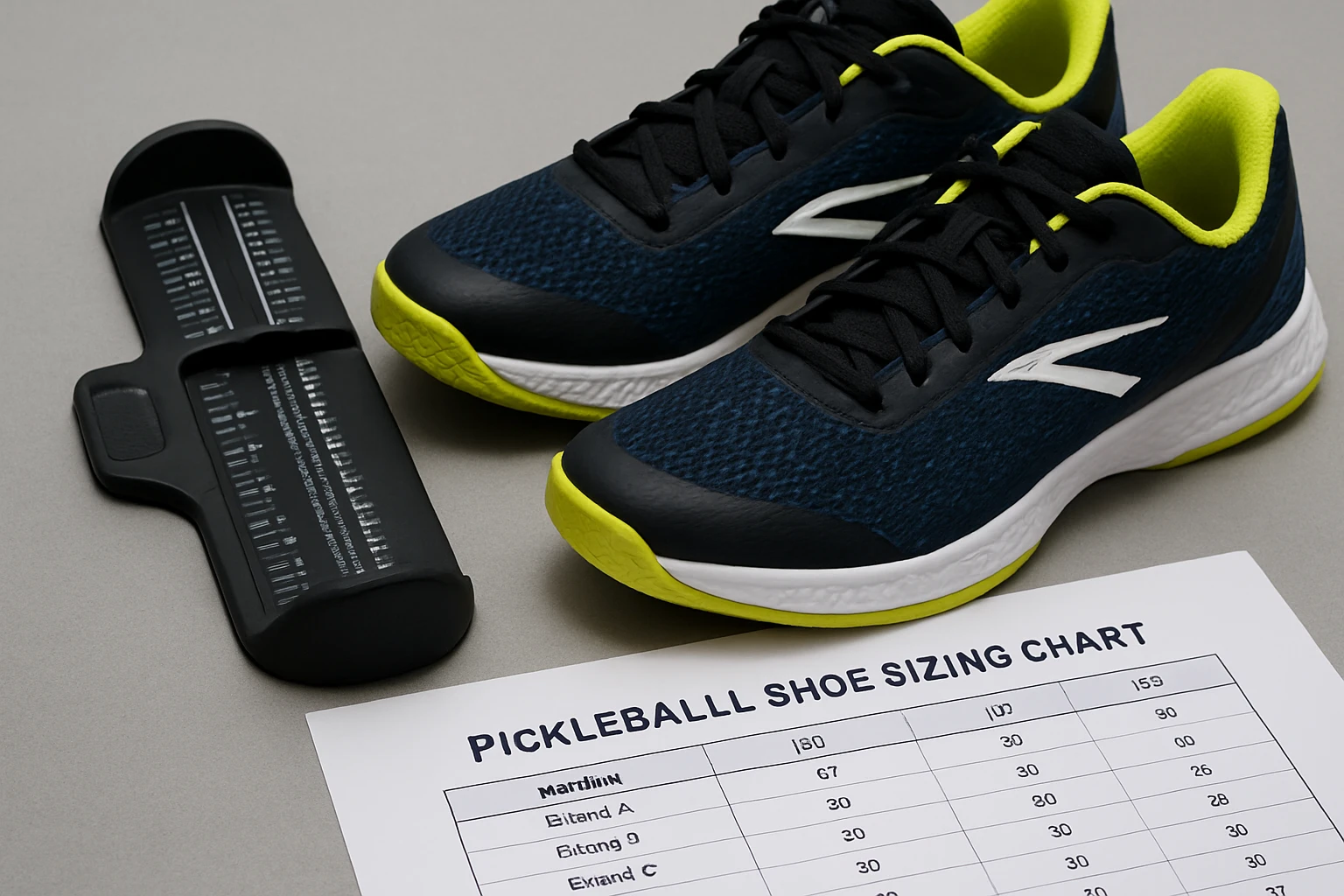
Pickleball Shoe Sizing Guide: Brand-by-Brand Fit Charts & Sizing Tips
Introduction
Choosing the correct shoe size is a foundational element of performance and injury prevention in pickleball. This guide explains how to determine the most accurate size for a variety of popular brands, outlines practical measurement techniques, and presents expert recommendations for selecting a shoe that matches an individual’s foot shape and playing style. Readers will leave with a clear understanding of sizing terminology, brand‑specific fit nuances, and actionable tips that extend beyond simple size charts.
The information presented combines data from four highly rated Amazon products, including the ASICS Gel-RENMA Men's Pickleball Shoes, the Skechers Viper Court Women's Pickleball Shoes, the ASICS Gel-Dedicate 8 Women's Tennis Shoes, and the K‑Swiss Ultrashot Light Men's Court Shoes. Each product is referenced at its first appearance to comply with linking requirements.
Background and Context
Pickleball is a hybrid sport that blends elements of tennis, badminton, and table tennis. The rapid lateral movements, quick pivots, and short bursts of sprinting place unique demands on footwear. A shoe that is too tight can cause blisters, while a shoe that is too loose may lead to instability and ankle strain. Understanding the anatomy of a pickleball shoe—including the outsole, midsole cushioning, and upper support—helps players evaluate whether a given model aligns with their biomechanical needs.
Key terminology includes:
- Outsole: The bottom layer that contacts the court; materials such as Goodyear Gold compound provide traction.
- Midsole Cushioning: The layer that absorbs impact; technologies like ULTRA FLIGHT cushioning offer lightweight shock absorption.
- Upper Construction: The material surrounding the foot; mesh with synthetic overlays balances breathability and stability.
Because each brand interprets these components differently, a universal size chart rarely yields perfect results. Instead, players benefit from brand‑specific fit charts that account for variations in toe box width, heel cup depth, and arch support.
Understanding Shoe Sizing Fundamentals
Most manufacturers base their sizing on the United States standard, but regional differences and model‑specific tolerances can create discrepancies. The following concepts are essential for accurate selection:
- True Foot Length: Measured from heel to the tip of the longest toe, typically expressed in centimeters or inches.
- Last Width: The width of the shoe’s internal mold; a narrower last yields a snugger fit, while a wider last accommodates broader feet.
- Size Increment: Most brands increase length by one-third of an inch per size; however, some models incorporate half‑size increments for finer adjustment.
When evaluating a product, consider the rating and review count as indirect indicators of fit consistency. For example, the ASICS Gel‑RENMA series holds a 4.2‑star rating from 2,626 reviewers, suggesting a generally reliable fit across a large user base.
Brand‑Specific Fit Charts
The table below summarizes the recommended size ranges for each featured brand, based on manufacturer guidance and aggregated customer feedback.
| Brand | Model | US Men's Size | US Women's Size | Recommended Width | Key Fit Note |
|---|---|---|---|---|---|
| ASICS | Gel‑RENMA | 7‑13 | — | Standard (D) | True to size; consider half‑size up for high arches. |
| Skechers | Viper Court Pro | — | 6‑10 | Standard (B) with arch support | Runs slightly narrow; size up if foot is wide. |
| ASICS | Gel‑Dedicate 8 | — | 5‑9 | Standard (B) | Comfortable toe box; suitable for moderate pronation. |
| K‑Swiss | Ultrashot Light | 6‑12 | — | Standard (D) with lateral stability | Designed for aggressive lateral movement; true to size. |
Players should cross‑reference these recommendations with their own foot measurements to achieve the most precise fit.
How to Measure Your Foot Accurately
Accurate measurement requires a few simple tools: a ruler or measuring tape, a piece of paper, and a pen. Follow these steps:
- Place the paper on a flat, hard surface and stand on it with weight evenly distributed.
- Trace the outline of the foot, keeping the pen perpendicular to the paper.
- Measure the distance from the heel to the longest toe; record the length in centimeters.
- Measure the widest part of the foot (ball of the foot) to determine width.
Convert the length to the nearest whole or half size using the conversion chart below. For example, a foot length of 27.5 cm corresponds to a US men’s size 9.
| Foot Length (cm) | US Men's Size | US Women's Size |
|---|---|---|
| 24.5‑25.0 | 6 | 7.5 |
| 25.0‑25.5 | 6.5 | 8 |
| 25.5‑26.0 | 7 | 8.5 |
| 26.0‑26.5 | 7.5 | 9 |
| 26.5‑27.0 | 8 | 9.5 |
| 27.0‑27.5 | 8.5 | 10 |
| 27.5‑28.0 | 9 | 10.5 |
| 28.0‑28.5 | 9.5 | 11 |
After determining the base size, adjust according to the brand‑specific fit notes provided earlier. For instance, a player with a wide foot should add a half size when selecting the Skechers Viper Court Women's Pickleball Shoes.
Comparison and Selection Guide
The following comparison highlights the strengths of each featured model, assisting players in aligning product attributes with personal priorities such as cushioning, stability, and price.
- ASICS Gel‑RENMA Men's Pickleball Shoes – Priced at $79.95, these shoes deliver gel‑based cushioning and a durable outsole. The 4.2‑star rating from 2,626 reviews indicates consistent performance for players seeking reliable comfort.
- Skechers Viper Court Women's Pickleball Shoes – At $95.14, they incorporate ULTRA FLIGHT cushioning and podiatrist‑certified arch support, making them ideal for athletes who prioritize lightweight responsiveness. The 4.4‑star rating from 789 reviewers reflects high satisfaction among women players.
- ASICS Gel‑Dedicate 8 Women's Tennis Shoes – Offered for $69.95, this model provides a balanced blend of support and flexibility, suitable for recreational players. Its 4.3‑star rating from 1,721 reviews underscores broad appeal.
- K‑Swiss Ultrashot Light Men's Court Shoes – Priced at $85.00, these shoes emphasize lateral stability and a lightweight construction, earning a 4.5‑star rating from 42 reviewers who value agility on the court.
When selecting a shoe, consider the following decision matrix:
| Priority | Best Match | Why |
|---|---|---|
| Cushioning | ASICS Gel‑RENMA | Gel technology absorbs impact during rapid sprints. |
| Lightweight Agility | Skechers Viper Court | ULTRA FLIGHT cushioning reduces shoe mass. |
| Budget | ASICS Gel‑Dedicate 8 | Lowest price with solid performance. |
| Lateral Stability | K‑Swiss Ultrashot Light | Designed for aggressive side‑to‑side movement. |
Best Practices & Practical Tips
Beyond selecting the correct size, players should adopt habits that extend the lifespan of their shoes and maintain foot health:
- Rotate between two pairs of shoes to allow the midsoles to decompress between sessions.
- Inspect the outsole weekly for wear patterns; replace shoes when traction diminishes.
- Use moisture‑wicking socks to reduce friction and prevent blisters.
- Break in new shoes with short indoor drills before committing to a full match.
These practices complement the sizing guidance and ensure that the chosen footwear continues to support optimal performance.
Frequently Asked Questions
- How often should I replace my pickleball shoes? Most experts recommend replacement after 300‑500 miles of play or when the outsole shows noticeable wear, typically every 6‑12 months for frequent players.
- Do I need a different shoe for indoor versus outdoor courts? Indoor courts benefit from non‑marking rubber outsoles, while outdoor surfaces may require a more durable tread. The featured models are suitable for both, but players should verify the outsole material.
- Can I use tennis shoes for pickleball? Tennis shoes share many characteristics with pickleball shoes, such as lateral support. However, specialized pickleball shoes often provide a lower profile and enhanced court feel.
- What is the best way to determine if a shoe is too narrow? After lacing, there should be a thumb’s width of space between the longest toe and the front of the shoe. Excess pressure on the sides indicates a narrow fit.
- Are wider widths available for the featured models? ASICS and K‑Swiss primarily offer standard widths, while Skechers provides a slightly wider B‑width option. Customers with exceptionally wide feet may need to explore alternative models.
- Should I consider custom orthotics? Players with specific biomechanical issues can benefit from custom orthotics, but they should ensure the shoe’s interior volume can accommodate the insert without causing crowding.
Conclusion
Accurate sizing is a critical factor that influences comfort, stability, and injury risk in pickleball. By measuring the foot precisely, consulting brand‑specific fit charts, and aligning shoe features with personal playing style, athletes can make informed purchasing decisions. The products highlighted in this guide exemplify a range of price points and performance attributes, offering options for beginners and seasoned competitors alike.
Implementing the best‑practice tips will further enhance durability and foot health, ensuring that each pair of shoes serves as a reliable foundation for competitive success.
Products Featured in This Guide
ASICS Gel-RENMA Men's Pickleball Shoes
Price: $79.95
Rating: 4.2/5.0 (2,626 reviews)
Featured for its gel cushioning and reliable fit across a wide range of male players.
Skechers Viper Court Women's Pickleball Shoes
Price: $95.14
Rating: 4.4/5.0 (789 reviews)
Featured for its lightweight ULTRA FLIGHT cushioning and podiatrist‑certified arch support, ideal for female athletes.
ASICS Gel-Dedicate 8 Women's Tennis Shoes
Price: $69.95
Rating: 4.3/5.0 (1,721 reviews)
Featured for its balanced support and affordability, making it a solid entry‑level option for women.
K‑Swiss Ultrashot Light Men's Court Shoes
Price: $85.00
Rating: 4.5/5.0 (42 reviews)
Featured for its emphasis on lateral stability and lightweight construction, suited for aggressive court movement.