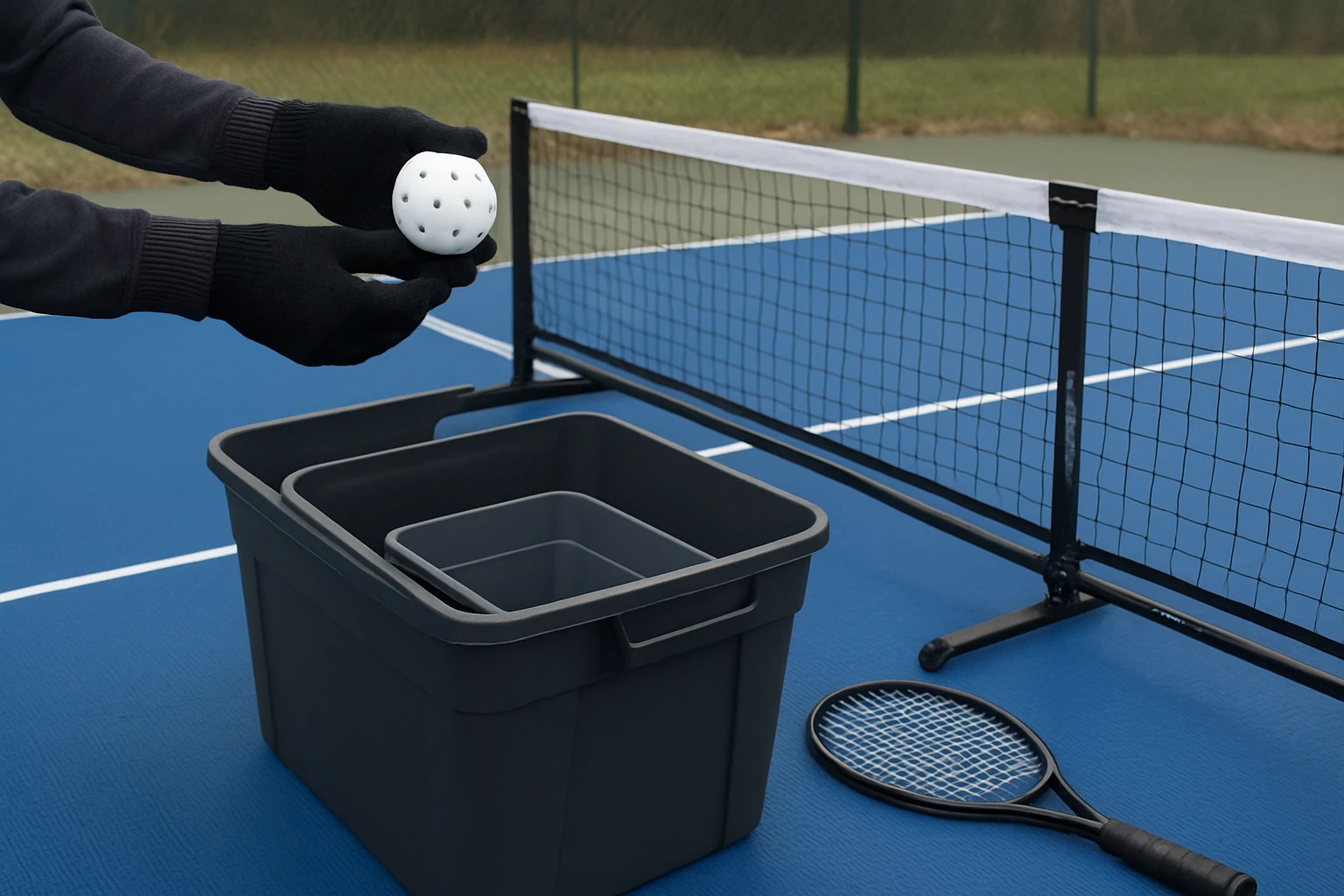
How to Winterize a Portable Pickleball Court: Step-by-Step Guide to Protect, Clean & Store
One will learn a systematic process for preparing a portable pickleball court for winter conditions. The guide explains why each action preserves the net, frame, and accessories from moisture, temperature fluctuations, and physical damage. By following the steps, one can extend the lifespan of the equipment and ensure optimal performance when the season returns. The information is valuable for coaches, club managers, and recreational players who invest in portable courts.
What You Will Need
- Mild detergent or specialized sports equipment cleaner
- Soft-bristle brush or sponge
- Clean, lint‑free towels
- Water‑proof storage bag (included with many nets)
- Silicone‑based protectant spray for metal frames
- Rubber mat or pallet for elevating components
- Fostoy 3-in-1 Portable Pickleball Net
Step 1: Inspect and Disassemble the Court
The first action is to examine the net, poles, and carry bag for any visible wear or damage. One should look for rust on metal connectors, frayed netting, or cracked wheels, because early detection prevents further deterioration during storage. Using the quick‑release mechanisms, detach the net from the frame and remove the wheels, following the manufacturer’s instructions. The Fostoy 3-in-1 Portable Pickleball Net features a pulley design that enables rapid disassembly without tools, which simplifies this step.
Step 2: Clean the Net and Frame
One must remove dust, dirt, and sweat residues that can attract moisture during cold months. Prepare a solution of warm water and a mild detergent, then gently scrub the 18‑ply PE net with a soft‑bristle brush; the double‑stitched PVC tarp resists tearing, but gentle handling ensures longevity. For the metal frame, wipe down each pole with a damp cloth and a non‑abrasive cleaner to eliminate surface contaminants that could accelerate corrosion. The robust construction of the Fostoy 3-in-1 Portable Pickleball Net—including a 1 mm wall thickness and iron middle support rod—benefits from thorough cleaning before protective coating is applied.
Step 3: Dry All Components Completely
Moisture trapped inside the net or metal tubes can freeze and cause cracks during winter. Lay the net flat on a clean surface and allow it to air dry for at least two hours, or use clean towels to blot excess water. Elevate the poles on a rubber mat or pallet to promote airflow around the metal sections, reducing the risk of condensation. One should verify that no damp spots remain before proceeding to the next step.
Step 4: Apply Protective Coating to Metal Parts
A silicone‑based protectant spray creates a barrier that repels water and inhibits rust formation on steel components. Spray a light, even coat onto each pole, wheel axle, and the base plate, then wipe off any excess with a lint‑free cloth. The coating adheres well to the frosted metal finish of the Fostoy 3-in-1 Portable Pickleball Net, preserving its tactile qualities while enhancing wear resistance. Allow the protectant to cure for the time recommended by the manufacturer, typically 15‑30 minutes.
Step 5: Store the Net in Its Carry Bag
The 600D carry bag supplied with the net is designed to shield the equipment from snow, rain, and UV exposure. Fold the net carefully, ensuring that the magic straps at the top remain engaged to prevent sagging during storage. Place the net, poles, and wheels inside the bag, then seal the zippers tightly. Because the bag is made from heavy‑duty polyester, it offers superior durability compared with generic storage sacks, making it an essential tool for winter protection.
Step 6: Choose an Appropriate Storage Location
One should store the bag in a climate‑controlled environment, such as a garage with a dehumidifier or a dedicated storage closet. Avoid direct contact with concrete floors, which can transmit moisture to the bag and accelerate corrosion of the metal frame. If a climate‑controlled space is unavailable, elevate the bag on a pallet and cover it with a waterproof tarp to create a secondary barrier. Maintaining a stable temperature reduces the risk of material fatigue caused by repeated freeze‑thaw cycles.
Step 7: Create a Seasonal Maintenance Checklist
Before the next playing season, one can reference a checklist to verify that the net remains in optimal condition. The checklist should include inspection of the netting for tears, verification of the protective coating’s integrity, and testing of the pulley mechanism for smooth operation. By documenting any issues now, one can address them promptly, avoiding costly repairs later. The modular design of the Fostoy 3-in-1 Portable Pickleball Net makes it easy to replace individual components if necessary.
Tips & Pro Tips
- Use a soft brush to avoid damaging the 18‑ply PE net; harsh scrubbing can create micro‑tears that enlarge over time.
- Apply the silicone protectant in a well‑ventilated area to prevent inhalation of fumes.
- Label the carry bag with the storage date; this helps track how long the equipment has been in winter storage.
- Consider adding silica gel packets inside the bag to absorb residual humidity.
- When reassembling, check that the interlocking parts align correctly; the clearly labeled components of the Fostoy system reduce assembly errors.
Troubleshooting
Problem: Net retains a musty odor after storage.
Solution: Air the net outdoors on a dry, sunny day and lightly mist it with a mixture of water and white vinegar; the odor will dissipate.
Problem: Wheels become stiff or squeak.
Solution: Apply a few drops of silicone spray to the wheel bearings and rotate the wheels to distribute the lubricant evenly.
Conclusion
One now possesses a comprehensive, step‑by‑step method for winterizing a portable pickleball court, from inspection to long‑term storage. By following the outlined actions and employing the recommended tools, the net, frame, and accessories will remain protected against harsh winter conditions. The process not only safeguards the investment but also ensures that the court is ready for immediate use when spring arrives. One is encouraged to implement this routine annually for consistent performance and durability.
Products Mentioned in This Guide
Frequently Asked Questions
Why is it important to winterize a portable pickleball court?
Winterizing protects the net, frame, and accessories from moisture, temperature changes, and physical damage, extending their lifespan.
What basic supplies are needed to winterize a portable pickleball court?
You need mild detergent, a soft‑bristle brush or sponge, lint‑free towels, a waterproof storage bag, silicone‑based protectant spray, and a rubber mat or pallet.
How should I inspect the court before storage?
Examine the net, poles, and carry bag for wear, rust, or loose fittings, and note any repairs needed before cleaning.
What is the best way to clean the net and frame?
Use a mild detergent with a soft brush or sponge, rinse gently, then dry with lint‑free towels before applying a silicone protectant to metal parts.
How should the components be stored for winter?
Store the net in a waterproof bag, elevate metal parts on a rubber mat or pallet, and keep everything in a dry, temperature‑controlled area.