How to Choose the Best Pickleball Ball for Asphalt vs. Concrete vs. Acrylic Courts: Ultimate Guide
Introduction
This guide explains how surface type influences ball performance and provides a systematic approach to selecting the most suitable pickleball ball. Readers will learn the physics of bounce, material considerations, and how to match product specifications to court conditions. The article also highlights two highly rated products that excel on specific surfaces. By the end of the guide, one will be equipped to make an informed purchase decision and improve on‑court results.
Background and Context
Pickleball is played on three primary outdoor surfaces: asphalt, concrete, and acrylic. Each surface possesses distinct texture, hardness, and temperature retention characteristics that affect ball speed, spin, and durability. Understanding these variables is essential for players who seek consistent performance across venues. The United States Pickleball Association (USAPA) sets standards for ball size, weight, and rebound hardness, ensuring fairness in competition.
Understanding Court Surfaces
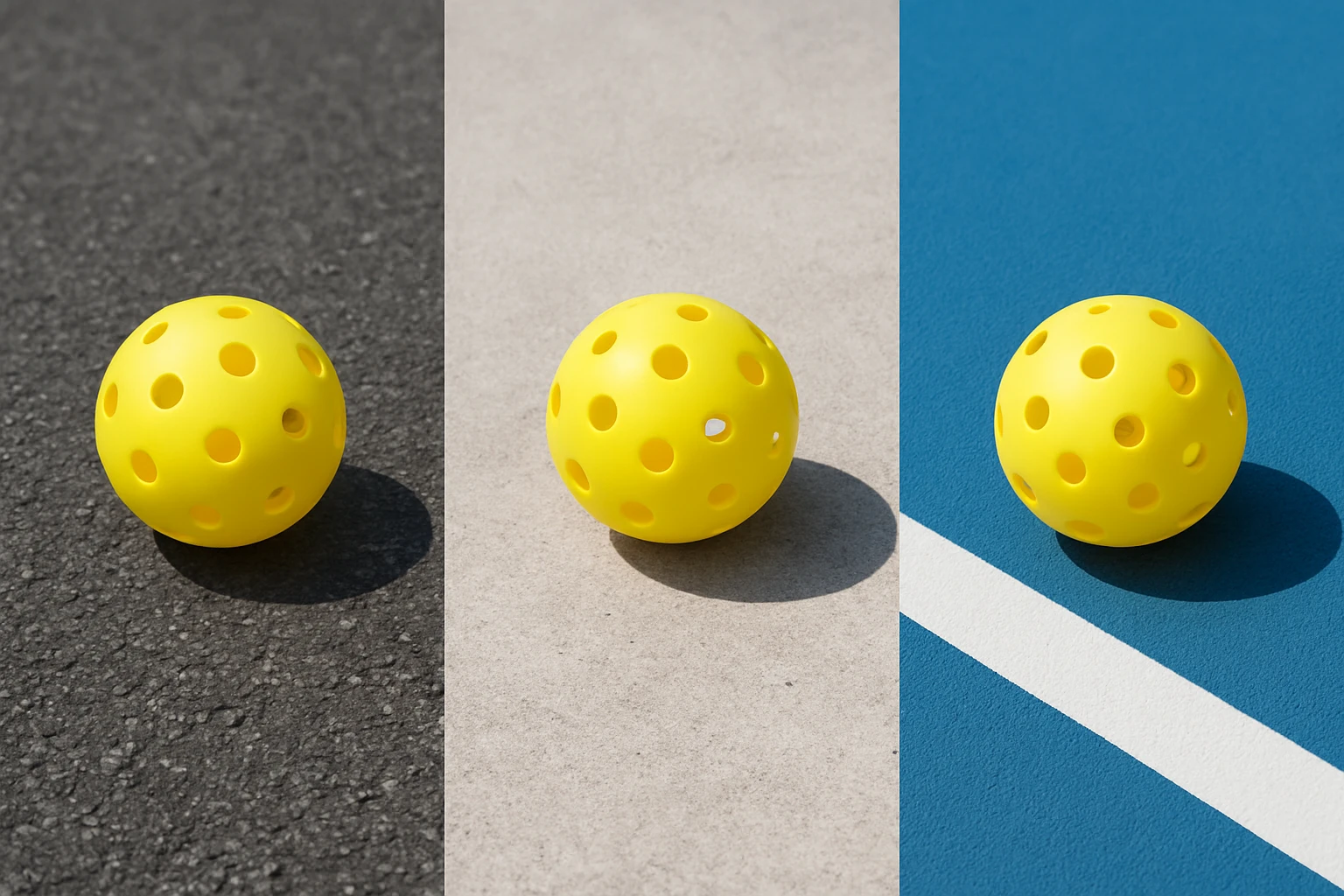
Asphalt courts are typically rougher and retain more heat, which can increase ball speed and reduce bounce height. Concrete surfaces are smoother but may develop micro‑cracks that influence ball trajectory. Acrylic courts are coated with a polymer layer that offers a uniform, low‑friction playing field, often resulting in a slower, more controlled bounce. Players must consider these differences when choosing a ball.
- Asphalt: High friction, higher temperature, faster ball travel.
- Concrete: Moderate friction, stable bounce, occasional surface irregularities.
- Acrylic: Low friction, consistent bounce, cooler surface temperature.
Ball Construction and Materials
Modern outdoor pickleballs are constructed from thermoplastic elastomer (TPE) or similar high‑elasticity polymers. TPE provides a balance between softness for a true flight and hardness for durability. Seam welding technology reduces the likelihood of cracks, especially on abrasive surfaces. The number and precision of holes also affect airflow and spin stability.
Two products exemplify these engineering principles:
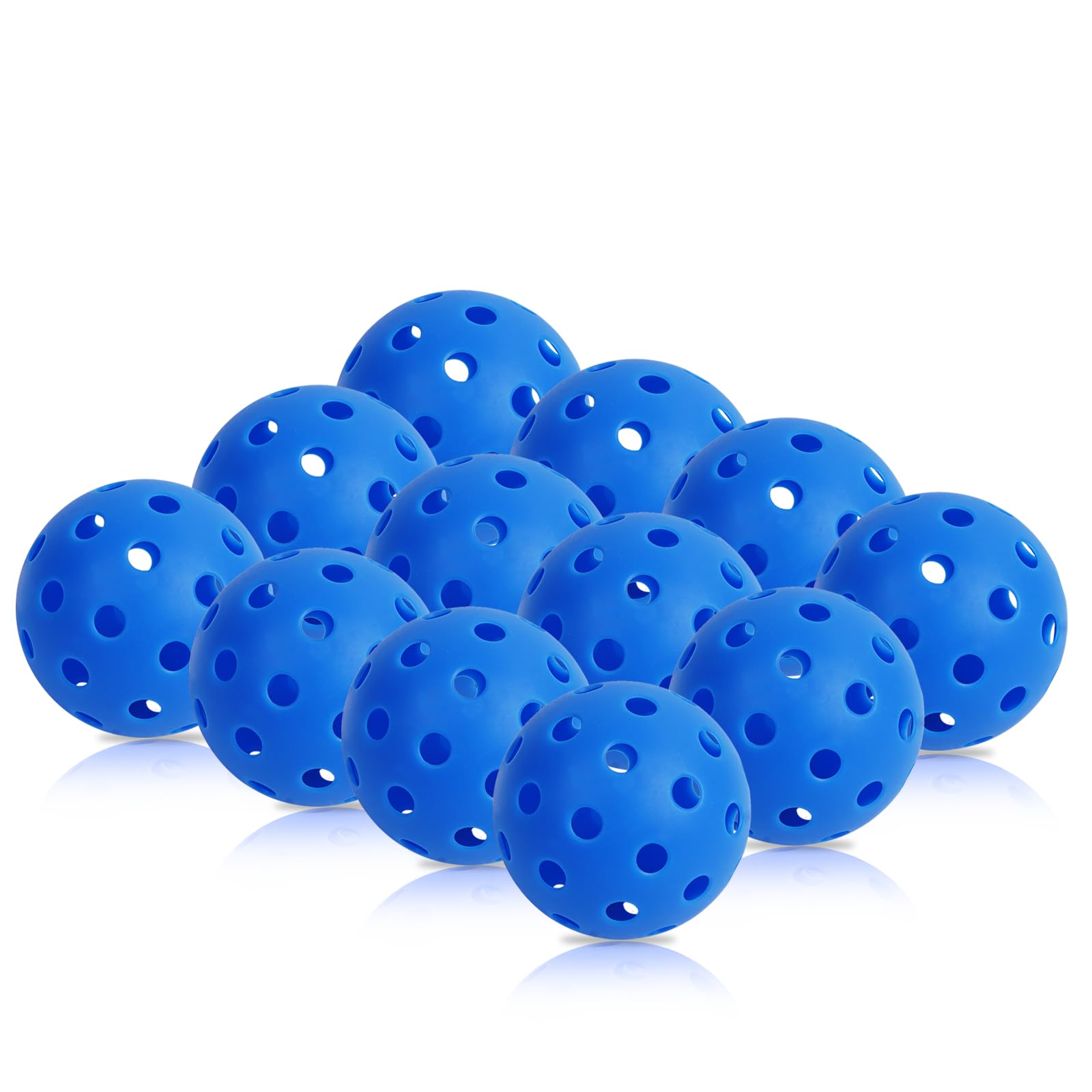
- Fizzazzle Outdoor Pickleball Balls – 40 precisely drilled holes, high‑elasticity TPE, USAPA standard.
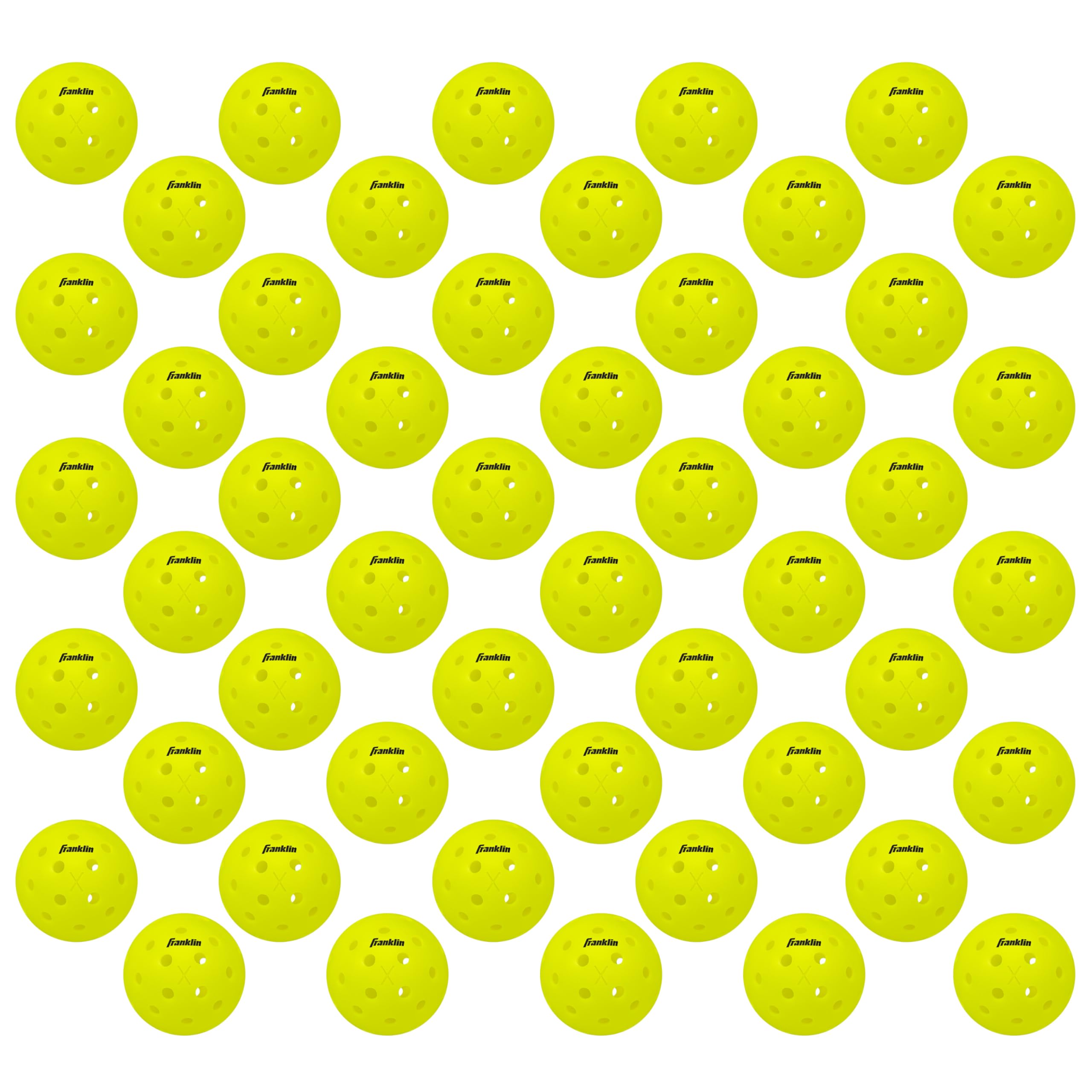
- Franklin Sports X-40 Pickleballs – machine‑drilled 40 holes, seamless one‑piece construction, USAP approved.
Bounce and Flight Characteristics
Ball bounce is measured by rebound hardness, expressed in millimeters after a standard drop test. A higher rebound rating yields a livelier bounce, which is advantageous on slower surfaces such as acrylic. Conversely, a slightly lower rebound helps control speed on hot asphalt. The hole pattern influences aerodynamic drag; uniform holes create a stable flight path, reducing wobble caused by wind.
Both featured balls meet USAPA specifications of 74 mm diameter and 26 g weight, ensuring comparable baseline performance. The primary distinction lies in material composition: Fizzazzle uses a premium TPE blend for enhanced elasticity, while Franklin Sports employs a single‑piece molded design for superior durability on rough surfaces.
Durability Considerations
Durability is a critical factor for outdoor play. Asphalt and concrete can cause abrasion that leads to denting or cracking over time. Balls with reinforced seams and high‑grade polymers resist such damage. The Franklin Sports X-40’s seamless construction is specifically marketed for concrete and asphalt durability, while the Fizzazzle balls emphasize a strong seam weld and high‑contrast color for visibility.
Long‑term cost analysis should account for the number of balls required per season. A ball that lasts 30 % longer can offset a higher upfront price, especially for clubs that purchase in bulk.
Choosing the Right Ball for Each Surface
When evaluating a ball for a particular surface, consider the following matrix:
| Surface | Preferred Bounce | Material Priority | Recommended Product |
|---|---|---|---|
| Asphalt | Moderate to low rebound to control speed | High abrasion resistance, seamless construction | Franklin Sports X-40 Pickleballs |
| Concrete | Balanced rebound for consistent rally length | Durable TPE with reinforced seams | Fizzazzle Outdoor Pickleball Balls |
| Acrylic | Higher rebound for lively play | High‑elasticity TPE for true flight | Fizzazzle Outdoor Pickleball Balls |
Players who frequently switch between surfaces may maintain a mixed inventory to optimize performance.
Product Recommendations
Fizzazzle Outdoor Pickleball Balls
Price: $17.99 per pack (available in 4, 6, or 12 units). Rating: 4.6/5.0 based on 10 reviews. Key features include USAPA compliance, 40 precisely drilled holes for balanced flight, high‑elasticity TPE for consistent bounce, and a high‑contrast dark‑blue color for optimal visibility. The product promises a response within 12 hours for any issues, reflecting strong customer support.
Franklin Sports X-40 Pickleballs
Price: $69.11 for a bulk package. Rating: 4.7/5.0 based on 25,367 reviews, indicating widespread acceptance. Features comprise USAP approval, 40 machine‑drilled holes for precise spin control, seamless one‑piece construction for durability on concrete and asphalt, and bright high‑contrast colors for easy tracking. The brand’s legacy since 1946 adds credibility to the product’s quality.
Best Practices & Tips
- Inspect balls before each session; replace any with visible dents or cracks.
- Store balls in a cool, dry environment to preserve elasticity.
- Rotate balls regularly during practice to ensure even wear.
- When playing on hot asphalt, consider a ball with slightly lower rebound to maintain control.
- Use a ball with high‑visibility color for early morning or late evening matches.
- For tournament play, verify that the selected ball meets the official USAPA standards for the specific surface.
Frequently Asked Questions
- What is the difference between USAPA and USAP standards?
- USAPA refers to the United States Pickleball Association, which sets official tournament specifications. USAP is a typographical variant often used interchangeably, but the official term is USAPA.
- Can I use the same ball on indoor acrylic and outdoor acrylic courts?
- Yes, provided the ball meets USAPA specifications and is rated for outdoor durability; the performance will be similar on both surfaces.
- How many balls should a club purchase for a weekly league?
- A typical league with 8 courts benefits from a minimum of 30 balls to allow for rotation and replacement during the season.
- Do bright colors affect ball speed?
- No, color does not influence speed; it only improves visual tracking for players.
- Is a higher price always indicative of better performance?
- Not necessarily; performance depends on material quality, construction, and suitability for the specific surface. The guide highlights value‑based selections.
Conclusion
Choosing the appropriate pickleball ball requires an understanding of surface characteristics, material science, and durability requirements. By aligning ball specifications with the nuances of asphalt, concrete, and acrylic courts, players can achieve consistent bounce, reliable flight, and extended product life. The recommended Fizzazzle and Franklin Sports models exemplify how thoughtful engineering meets the demands of different playing environments.
Products Featured in This Guide
Fizzazzle Outdoor Pickleball Balls
Price: $17.99 | Rating: 4.6/5.0 (10 reviews)
Featured for its high‑elasticity TPE construction, precise 40‑hole design, and superior visibility on acrylic and concrete courts.
Franklin Sports X-40 Pickleballs
Price: $69.11 | Rating: 4.7/5.0 (25,367 reviews)
Featured for its seamless one‑piece construction, machine‑drilled holes, and proven durability on harsh asphalt and concrete surfaces.