How to Choose the Right Paddle Length for Tall Players: A Step-by-Step Guide
Introduction
Choosing the correct paddle length is essential for efficient propulsion, reduced fatigue, and improved control on the water. Tall paddlers often overlook subtle differences that can dramatically affect performance. This guide explains the scientific basis of paddle sizing and provides actionable steps to achieve a personalized fit. Readers will leave with confidence to select, test, and adjust a paddle that matches their stature and kayaking style.
What You'll Need
- Alloy Kayak Paddle – $30.95, 4.7/5 rating (7,705 reviews)
- Carbon Fiber Kayak Paddle – $62.99, 4.6/5 rating (635 reviews)
- Adjustable Kayak Paddle – $34.95, 4.7/5 rating (602 reviews)
- Measuring tape or a sturdy rope marked in centimeters
- Notebook for recording measurements and observations
Step 1: Assess Your Height and Kayak Width
Begin by standing upright with shoes on and measuring your total height from the floor to the top of your head. Record the measurement in centimeters, as most paddle specifications use metric units. Next, measure the cockpit width of your kayak; a wider cockpit may require a slightly longer paddle to maintain proper leverage. Understanding both personal and vessel dimensions creates a baseline for calculating an optimal paddle length.
Step 2: Understand Paddle Length Basics
The traditional formula for paddle length recommends adding the paddler's height to the kayak width, then adjusting for skill level. For tall paddlers, the formula often yields a length between 230 cm and 250 cm, depending on personal preference. Longer paddles increase stroke leverage but can cause over‑extension if the paddler lacks flexibility. Conversely, a paddle that is too short reduces power per stroke and may increase fatigue over long trips.
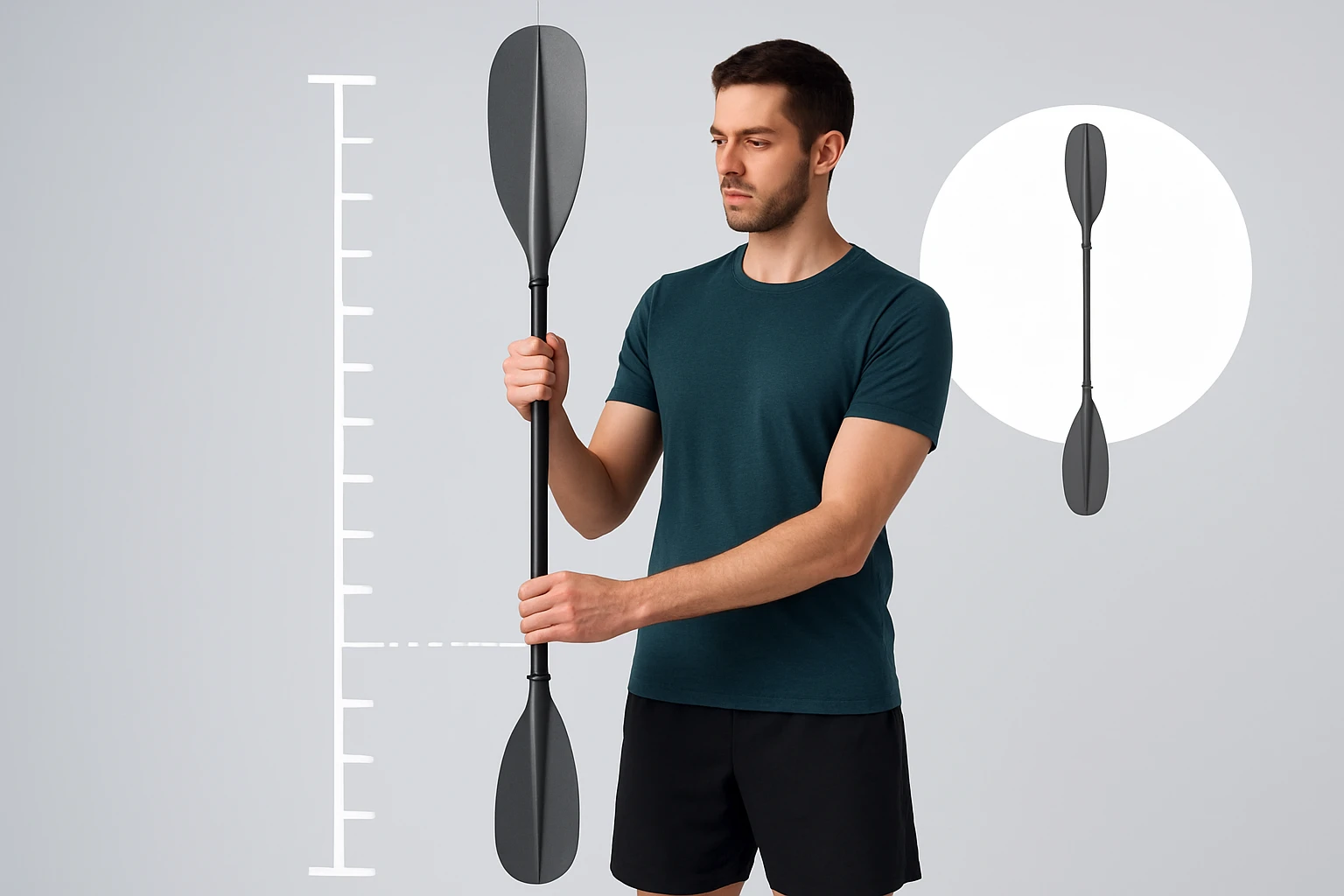
Step 3: Measure Your Ideal Paddle Length
To obtain a practical measurement, sit in your kayak with your legs extended and place the paddle blade on the water while keeping the shaft vertical. The top of the shaft should align with the tip of your nose when you extend your arm forward. This “nose‑to‑blade” test provides a visual cue for the most comfortable length. For tall players, the result typically falls near the 230 cm mark, making the Alloy Kayak Paddle a strong candidate.
Step 4: Choose the Right Paddle Type
If you prioritize durability and cost‑effectiveness, the Alloy Kayak Paddle offers a high‑quality aluminum shaft with a fiberglass‑reinforced PP blade, priced at $30.95 and backed by 7,705 positive reviews. Its 1.1 mm shell thickness ensures stiffness, while the shrinking PE tube cover prevents hand blisters, a valuable feature for long paddling sessions. For performance‑oriented paddlers seeking reduced weight, the Carbon Fiber Kayak Paddle weighs only 33 oz, features carbon fiber composite shafts, and includes feathered angles to combat headwinds; it retails for $62.99 with a 4.6/5 rating. Tall paddlers who desire flexibility across different water conditions may benefit from the Adjustable Kayak Paddle, which offers five length options from 220 cm to 240 cm and a three‑section design for compact transport, priced at $34.95 and receiving a 4.7/5 rating.
Step 5: Test the Paddle on Water
Take your selected paddle out for a short test run on calm water. Perform a series of forward strokes while monitoring arm extension, shoulder strain, and overall rhythm. If the paddle feels too long, you may experience over‑reaching; if it feels too short, you may notice reduced power per stroke. The Carbon Fiber Kayak Paddle excels in this phase because its lightweight construction minimizes fatigue during extended testing.
Step 6: Adjust and Secure Your Paddle
Once you have identified the most comfortable length, secure the paddle using the built‑in bungee leash to prevent loss during rests. The leash, present on all three recommended paddles, attaches to a loop on the kayak and keeps the paddle within reach. For the Adjustable Kayak Paddle, lock the shaft at the desired length using the 3‑position angle system, then verify that the drip rings are positioned correctly to keep water out of the grip area. Properly securing the paddle ensures safety and maintains performance throughout the outing.
Tips & Pro Tips
- When paddling in cold conditions, the PE tube cover on the Alloy Kayak Paddle prevents the shaft from feeling icy, protecting your hands from numbness.
- Experiment with feathered angles (0° or 60°) on the Carbon Fiber Kayak Paddle to reduce wind resistance on open water.
- If you frequently travel with your kayak, the detachable design of the Adjustable Kayak Paddle fits easily into a car trunk or roof rack.
- Regularly inspect the drip rings for wear; damaged rings can allow water to travel up the shaft, increasing weight and discomfort.
Troubleshooting
Problem: Persistent shoulder soreness after long paddling sessions.
Solution: Verify that the paddle length does not exceed the “nose‑to‑blade” measurement by more than 5 cm; consider switching to the lighter carbon fiber model to reduce load.
Problem: Paddle slips from the hand in wet conditions.
Solution: Ensure the ergonomic grip is clean and dry; the non‑slip rubber coating on the Carbon Fiber Kayak Paddle provides superior traction.
Conclusion
Selecting the appropriate paddle length for tall players involves measuring personal dimensions, understanding paddle geometry, testing on water, and making adjustments. By following the six steps outlined above, paddlers can achieve optimal efficiency, comfort, and safety. The recommended products—Alloy Kayak Paddle, Carbon Fiber Kayak Paddle, and Adjustable Kayak Paddle—offer a range of options to suit budget, performance, and versatility requirements. Armed with this knowledge, tall kayakers can embark on their next adventure with confidence and control.
Products Mentioned in This Guide
Frequently Asked Questions
What paddle length is recommended for a tall kayaker who is 6'4" (193 cm) tall?
Typically a paddle between 230‑240 cm works well, allowing a comfortable reach without over‑extending the arms.
How do I measure the correct paddle length for my height?
Measure from the tip of the paddle to the end of the grip while standing upright; the ideal length is about 2‑3 cm shorter than your height.
Can an adjustable paddle replace a fixed‑length paddle for tall paddlers?
Yes, an adjustable paddle lets you fine‑tune length (usually 210‑250 cm) to match different boat setups and stroke styles.
Does paddle material affect the ideal length for tall players?
Material doesn’t change the length needed, but lighter carbon fiber paddles feel easier to handle at longer lengths.
Will a longer paddle increase fatigue for tall kayakers?
If the paddle is properly sized, a longer blade improves power without added fatigue; an overly long paddle, however, can cause strain.