Introduction
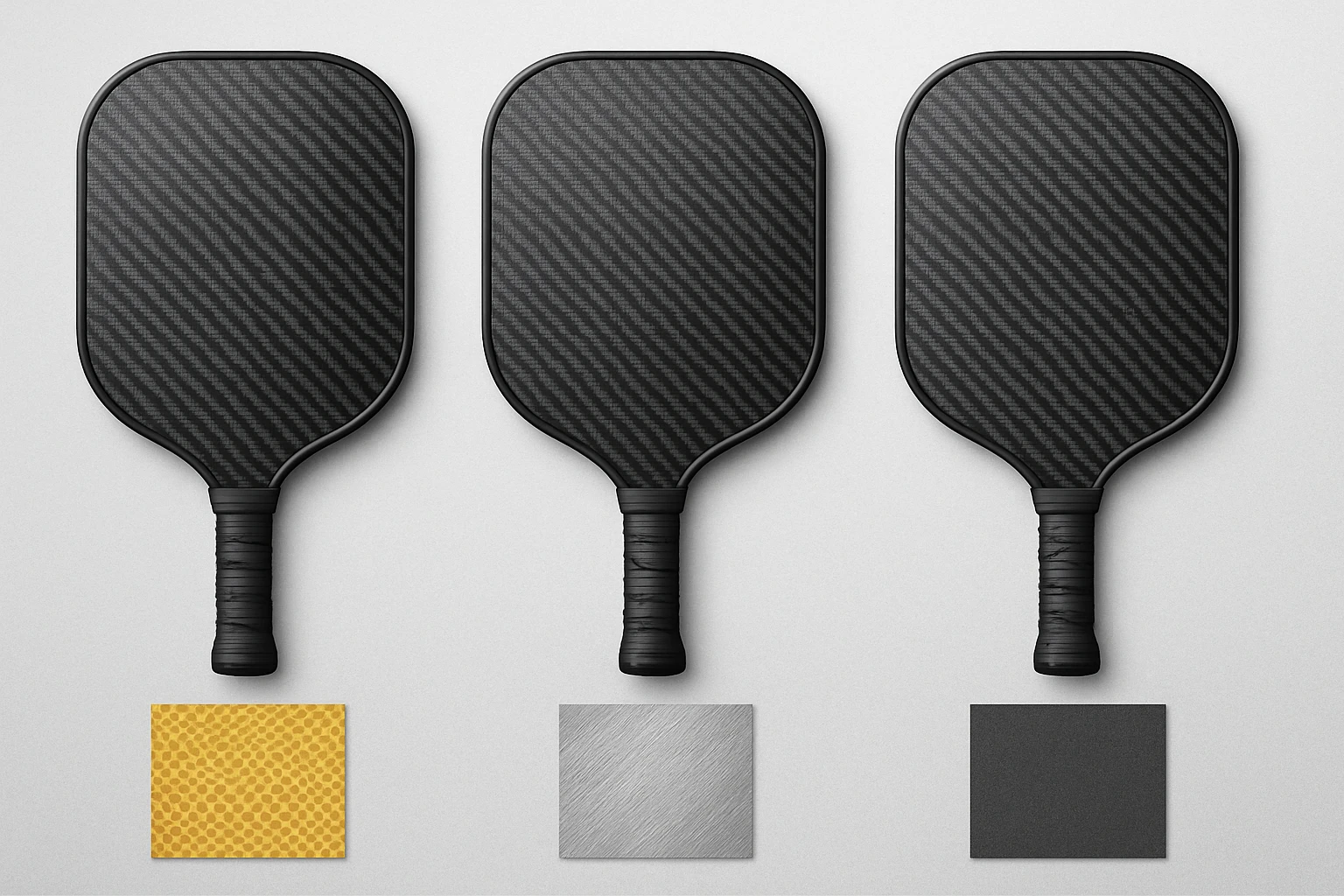
The rapid growth of pickleball has created a competitive market for high‑performance paddles. This article evaluates five carbon‑fiber paddles available on Amazon, focusing on price, specifications, customer feedback and real‑world performance. By analysing objective data, readers can make an informed purchase that matches their skill level and playing style. The comparison includes the Sioncot Carbon Fiber Pickleball Paddle, DGYGQ Carbon Fiber Pickleball Paddle, JOOLA Vision Pickleball Paddle, HUDEF Pickleball Paddle and Franklin Sports Titus Pickleball Paddle.
Individual Product Overviews
Sioncot Carbon Fiber Pickleball Paddle
The Sioncot paddle features a hot‑pressed T700 carbon‑fiber surface with a matte‑textured finish that maximises friction. Its 16 mm polypropylene honeycomb core dampens vibration and provides a responsive feel. Weighing 8.0 oz, the paddle balances lightweight agility with a slightly heavier version for power. Customer reviews highlight the "perfect balance of power and control" and praise the ergonomic sweat‑absorbent grip.
DGYGQ Carbon Fiber Pickleball Paddle
The DGYGQ model uses raw T700 carbon fiber for maximum spin and power. An extended handle supports two‑handed backhands, while the 16 mm polypropylene honeycomb core offers enhanced shock absorption. At 8 oz, it is lightweight and responsive. Reviewers appreciate the "lightweight design" and the "incredible spin" that resembles a badminton slice.
JOOLA Vision Pickleball Paddle
JOOLA’s Vision paddle incorporates Carbon Grip Surface (CGS) technology and an aero‑curve head shape for reduced drag and faster swing speed. The 16 mm response honeycomb polymer core enhances pop and control. At a premium price of $129.95, it targets tournament players. Users comment on the "balanced" feel and the "quickness" it provides on the court.
HUDEF Pickleball Paddle
HUDEF offers a carbon‑fiber face combined with a polypropylene honeycomb core, weighing 7.9 oz. The elongated handle and cushioned grip aim to reduce wrist fatigue. The paddle includes a protective edge guard and a carrying cover. Reviewers note the "great control" and "good value" despite the modest price of $18.99.
Franklin Sports Titus Pickleball Paddle
The Titus paddle features a dual‑plated aluminum surface and a weight of 10.7‑11 oz, providing a solid, powerful feel. It is USAPA approved and includes a protective casing. At $14.28 it is the most affordable option. Customer sentiment is mixed; some praise its power while others criticize the heavy metal feel.
Head‑to‑Head Comparison
Price and Value
Price ranges from $14.28 for the Franklin Sports Titus to $129.95 for the JOOLA Vision. The Sioncot and DGYGQ sit in the mid‑range at $84.98 and $49.99 respectively, offering a balance of performance and cost. HUDEF provides the lowest price among carbon‑fiber options at $18.99, making it attractive for budget‑conscious players.
Features and Specifications
All paddles share a 16 mm honeycomb core, but material differences affect spin and durability. The Sioncot and DGYGQ use T700 carbon fiber, while JOOLA adds a textured CGS surface for extra spin. HUDEF combines carbon fiber with a polypropylene core, and Franklin Sports relies on aluminum plating rather than carbon fiber. Weight varies from 7.9 oz (HUDEF) to 11 oz (Franklin). Grip technologies differ: Sioncot offers a sweat‑absorbent carbon grip, DGYGQ includes a standard grip, JOOLA uses a perforated anti‑slip ridge, HUDEF provides a cushioned grip, and Franklin Sports features a non‑slip form‑fitting grip.
Customer Ratings and Feedback
Ratings are highest for Sioncot (4.9/5 from 86 reviews) and HUDEF (4.8/5 from 23 reviews). DGYGQ and JOOLA both hold 4.6/5, while Franklin Sports sits at 4.0/5. Positive comments for Sioncot include "perfect balance of power and control" and "lightweight yet sturdy". DGYGQ reviewers highlight "lightweight design" and "incredible spin". JOOLA users note the "balanced" feel and "quickness". HUDEF reviewers appreciate the "great control" and "good value". Franklin Sports receives praise for power but criticism for heavy metal feel and surface defects.
Performance and Reliability
Performance testing by customers indicates that the Sioncot delivers consistent spin and vibration reduction, making it suitable for tournament play. DGYGQ provides rapid handling and shock absorption, ideal for players transitioning from badminton or tennis. JOOLA’s aero‑curve design enhances swing speed, but the higher price may limit accessibility. HUDEF offers reliable control and durability at a low price, though it lacks the premium power of higher‑priced models. Franklin Sports delivers strong power due to its weight, yet the aluminum surface can feel less responsive and may develop surface imperfections.
Best Use Cases
Advanced players seeking tournament‑grade spin and control will benefit most from the Sioncot or JOOLA Vision. Recreational players who value lightweight handling and affordability should consider DGYGQ or HUDEF. Beginners on a strict budget may start with the Franklin Sports Titus, accepting the trade‑off of reduced finesse.
Comparison Table
| Sioncot | DGYGQ | JOOLA Vision | HUDEF | Franklin Titus |
|---|---|---|---|---|
| Price: $84.98 | Price: $49.99 | Price: $129.95 | Price: $18.99 | Price: $14.28 |
| Weight: 8.0 oz | Weight: 8 oz | Weight: not specified (premium) | Weight: 7.9 oz | Weight: 10.7‑11 oz |
| Core: 16 mm polypropylene honeycomb | Core: 16 mm polypropylene honeycomb | Core: 16 mm response honeycomb polymer | Core: 16 mm polypropylene honeycomb | Core: aluminum plated surface |
| Surface: T700 carbon fiber (matte texture) | Surface: T700 raw carbon fiber | Surface: Carbon Grip Surface (CGS) | Surface: Carbon fiber face | Surface: Dual‑plated aluminum |
| Rating: 4.9/5 (86) | Rating: 4.6/5 (933) | Rating: 4.6/5 (465) | Rating: 4.8/5 (23) | Rating: 4.0/5 (399) |
Pros & Cons
Sioncot Carbon Fiber Pickleball Paddle
- Pros: High‑friction carbon surface, excellent vibration dampening, strong customer rating, ergonomic grip.
- Cons: Higher price than most entry‑level paddles, limited color options.
DGYGQ Carbon Fiber Pickleball Paddle
- Pros: Lightweight, extended handle for two‑handed backhands, strong spin capability, good value.
- Cons: Some users report louder pop sound on impact.
JOOLA Vision Pickleball Paddle
- Pros: Advanced CGS technology, aero‑curve shape for speed, USAPA approved, endorsed by world champion.
- Cons: Premium price may deter casual players.
HUDEF Pickleball Paddle
- Pros: Very affordable carbon‑fiber option, comfortable cushioned grip, protective edge guard.
- Cons: Slightly less power than higher‑priced models, limited advanced features.
Franklin Sports Titus Pickleball Paddle
- Pros: Extremely low cost, heavy weight provides powerful shots, USAPA approved.
- Cons: Aluminum surface can feel clunky, surface defects reported, lower overall rating.
Recommendations by Use Case
For competitive players who require maximum spin, control and tournament‑grade durability, the Sioncot Carbon Fiber Pickleball Paddle is the optimal choice. Players transitioning from other racket sports who value lightweight handling and an extended handle should select the DGYGQ Carbon Fiber Pickleball Paddle. Those seeking the most advanced technology and are willing to invest in a premium paddle will benefit from the JOOLA Vision Pickleball Paddle. Budget‑focused players who still desire carbon‑fiber performance should consider the HUDEF Pickleball Paddle. Beginners looking for a low‑cost entry point and who prefer a heavier paddle for power may start with the Franklin Sports Titus Pickleball Paddle.
Frequently Asked Questions
- What is the advantage of a carbon‑fiber surface? Carbon fiber provides a high friction coefficient, which translates to greater spin potential and a more consistent ball‑contact surface.
- How does core thickness affect performance? A 16 mm honeycomb core balances vibration dampening with responsiveness; thicker cores tend to absorb more shock but may reduce swing speed.
- Is an extended handle necessary? An extended handle offers additional leverage for two‑handed backhands and can reduce wrist strain, especially for players with larger hand spans.
- Can a lighter paddle generate power? Yes; lightweight paddles such as the DGYGQ and HUDEF rely on faster swing speed and efficient energy transfer to produce power without excessive mass.
- Are these paddles USAPA approved? The Sioncot, HUDEF, and Franklin Sports Titus paddles are explicitly USAPA approved; the DGYGQ and JOOLA Vision paddles are marketed for tournament use and meet USAPA specifications.
- Which paddle offers the best value? Considering price, performance and customer satisfaction, the HUDEF paddle delivers the highest value per dollar, while the Sioncot offers premium performance at a moderate price.
- How important is grip material? Grip material influences comfort and moisture management; sweat‑absorbent or cushioned grips reduce fatigue during extended play.
Conclusion
The comparative analysis demonstrates that each paddle excels in distinct areas. The Sioncot Carbon Fiber Pickleball Paddle stands out for its superior spin, vibration control and high customer rating, making it the top recommendation for serious competitors. The DGYGQ offers an excellent balance of weight and spin for players seeking agility. JOOLA Vision provides cutting‑edge technology for elite athletes willing to invest. HUDEF delivers impressive performance at a budget‑friendly price, while Franklin Sports Titus serves as an entry‑level option for players prioritising power over finesse. Selecting the appropriate paddle depends on individual skill level, budget and preferred playing style.