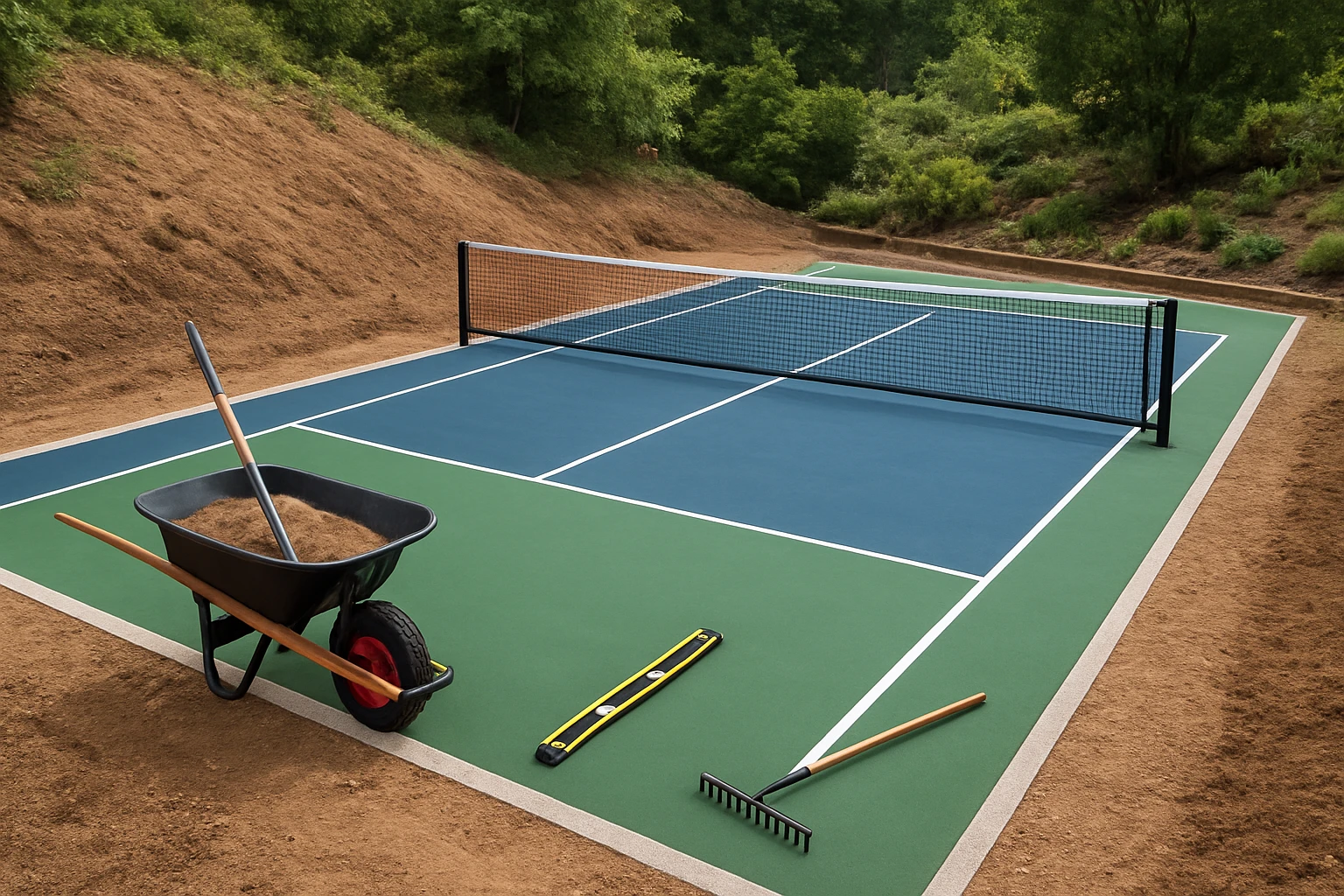
How to Build a Backyard Pickleball Court on a Slope: Step‑by‑Step DIY Guide to Leveling, Drainage & Surfacing
Constructing a pickleball court on a sloped yard presents unique challenges, but with careful planning and the right tools, one can achieve a flat, durable playing surface. This guide explains how to assess the slope, design proper drainage, level the sub‑base, and apply a professional‑grade surface. Readers will gain confidence to complete the project themselves while understanding when specialized equipment, such as the BTYCityMao Self‑Leveling Cement Tool Kit, can streamline the process.
What You’ll Need
- Measuring wheel and laser level
- Shovel, pickaxe, and compacting plate
- Geotextile fabric
- Crushed stone base (¾‑inch) and sand
- Self‑leveling concrete mix
- Surface coating designed for sports courts
- Perimeter edging and net system
- Protective gear (knee pads, gloves)
- BTYCityMao Self‑Leveling Cement Tool Kit
Step 1: Evaluate the Site and Establish a Reference Plane
Begin by measuring the existing slope using a laser level or a builder’s level. Mark a reference line along the longest side of the intended court; this line will serve as the zero‑point for all subsequent grading. Record the vertical difference between high and low points; most courts require a maximum fall of 1/4 inch per 10 feet to ensure proper drainage without compromising playability.
Why this matters: establishing a reference plane prevents hidden low spots that could collect water, leading to surface cracking later. Accurate measurements also guide the amount of fill material needed, reducing waste.
Step 2: Excavate and Remove Unsuitable Soil
Using a shovel and pickaxe, excavate the area to a depth of 8–10 inches below the final court surface. Remove organic material, loose sand, and any debris that could compromise compaction. For steep sections, create a series of terraces to reduce the angle of the cut, which eases later compaction and minimizes erosion.
Tip: Keep the excavated soil on‑site for back‑filling lower areas; this reduces hauling costs and maintains site consistency.
Step 3: Install a Drainage System
Proper drainage is essential on a slope. Lay perforated drainage pipe (4‑inches) at the low end of the court, encased in a gravel trench 6 inches wide and 12 inches deep. Cover the pipe with a geotextile fabric to prevent soil infiltration, then backfill with crushed stone. This system directs water away from the playing surface, preventing pooling.
Why it works: The combination of gravity‑driven flow and a permeable stone bed ensures water exits the court quickly, preserving the integrity of the self‑leveling concrete.
Step 4: Build and Compact the Sub‑Base
Spread a 4‑inch layer of crushed stone across the entire area, then compact it with a plate compactor. Perform a second 2‑inch layer of sand, screeding it to a uniform thickness. The sand acts as a forgiving cushion for the self‑leveling concrete, helping to distribute loads evenly.
Professional tip: Use a 2‑by‑4 board as a screed guide, moving it in a back‑and‑forth motion while pulling a straightedge across the surface. This yields a flat, level substrate ready for the next step.
Step 5: Apply Self‑Leveling Concrete Using the BTYCityMao Kit
The BTYCityMao Self‑Leveling Cement Tool Kit simplifies the mixing, spreading, and finishing of self‑leveling concrete on a sloped surface. The kit includes a long roller brush, spiked roller, adjustable threaded pole, and a rake with 5 mm teeth, all constructed from stainless steel and high‑strength plastic for durability.
Key features that benefit this project:
- Adjustable threaded pole eliminates the need for temporary extensions, saving time.
- 20‑inch spiked roller head with threads matches the pole, ensuring even distribution of the mix.
- High‑strength plastic scraper with adjustable angles allows precise control in corners.
- Eva knee‑pad protects the user during prolonged kneeling.
Procedure:
- Mix the self‑leveling concrete according to the manufacturer’s instructions, aiming for a pourable but not runny consistency.
- Using the kit’s rake, spread the mixture across the sand layer, working from the high point toward the low point.
- Engage the long roller brush to push the mix into low spots, then follow with the spiked roller to remove air bubbles and level the surface.
- Allow the concrete to cure for the recommended 24‑hour period before proceeding.
Product details: Priced at $48.99, the kit holds a 4.2‑star rating from 36 reviewers, indicating reliable performance for DIY enthusiasts and professionals alike.
Step 6: Apply the Sports‑Court Surface Coating
After the self‑leveling concrete has cured, clean the surface of dust and debris. Apply a primer designed for concrete sports floors, then follow with a two‑coat acrylic surface system specifically formulated for pickleball courts. Use a short‑nap roller for even coverage and a trowel for any touch‑ups.
Why multiple coats: The primer enhances adhesion, while the topcoat provides the necessary slip‑resistance and UV stability for outdoor use.
Step 7: Install Perimeter Edging and Net System
Secure a metal or PVC perimeter border around the court to define the playing area and protect the edges from erosion. Install the net posts according to the official pickleball dimensions (20 ft × 44 ft). Anchor the posts in concrete footings set at least 12 inches below the finished surface.
Final check: Verify that the court is level within 1/8 inch across the entire surface using a long straightedge. Any high spots can be lightly sanded, while low spots may require a thin overlay of self‑leveling mix.
Tips & Pro Tips
- Perform the project during dry weather; moisture can affect concrete curing and drainage installation.
- Use a moisture barrier beneath the crushed stone if the soil has high water content.
- Wear the included EVA knee pads from the BTYCityMao kit to reduce fatigue during extended spreading work.
- Test the surface with a light ball bounce before applying the final coat; uneven bounce indicates hidden low spots.
- Consider adding a slight crown (1‑2 inches) at the center of the court to enhance water runoff.
Troubleshooting
| Problem | Cause | Solution |
|---|---|---|
| Water pooling after rain | Insufficient slope or blocked drainage pipe | Re‑grade low spots and clean the drainage pipe; add additional gravel if needed. |
| Surface cracks | Improper curing or inadequate sub‑base compaction | Maintain humidity during cure, and ensure the sub‑base is fully compacted before pouring. |
| Uneven ball bounce | Air bubbles or low spots in self‑leveling concrete | Use the spiked roller from the BTYCityMao kit to release bubbles; apply a thin skim coat to low areas. |
Conclusion
Building a backyard pickleball court on a slope is achievable with systematic planning, proper drainage, and the right leveling tools. By following the steps outlined above, one can transform an uneven yard into a professional‑grade playing surface that endures weather and heavy use. The BTYCityMao Self‑Leveling Cement Tool Kit offers a cost‑effective solution for mixing and finishing the concrete, ensuring a smooth, level base for the final surface coating. With patience and attention to detail, the finished court will provide years of enjoyment for family and friends.
Products Mentioned in This Guide
Frequently Asked Questions
How do I determine if my yard’s slope is suitable for a pickleball court?
Use a measuring wheel and a laser level to calculate the grade; a slope steeper than 5% usually requires extensive grading or retaining walls.
What drainage solutions are recommended for a sloped pickleball court?
Install a French drain or perforated pipe at the low point and grade the sub‑base away from the playing area to prevent water pooling.
Which materials should I use to level the surface before applying the court coating?
Lay geotextile fabric, then a 4‑6 inch crushed stone base topped with a sand layer, and finish with self‑leveling concrete mix.
Can the BTYCityMao Self‑Leveling Cement Tool Kit be used by DIY homeowners?
Yes, the kit includes a mixer, trowel, and guide rails that simplify pouring and smoothing self‑leveling concrete for non‑professionals.
Do I need a permit to build a backyard pickleball court on a slope?
Check local zoning codes; many municipalities require a building permit or site‑plan approval for new hard‑scape installations.